
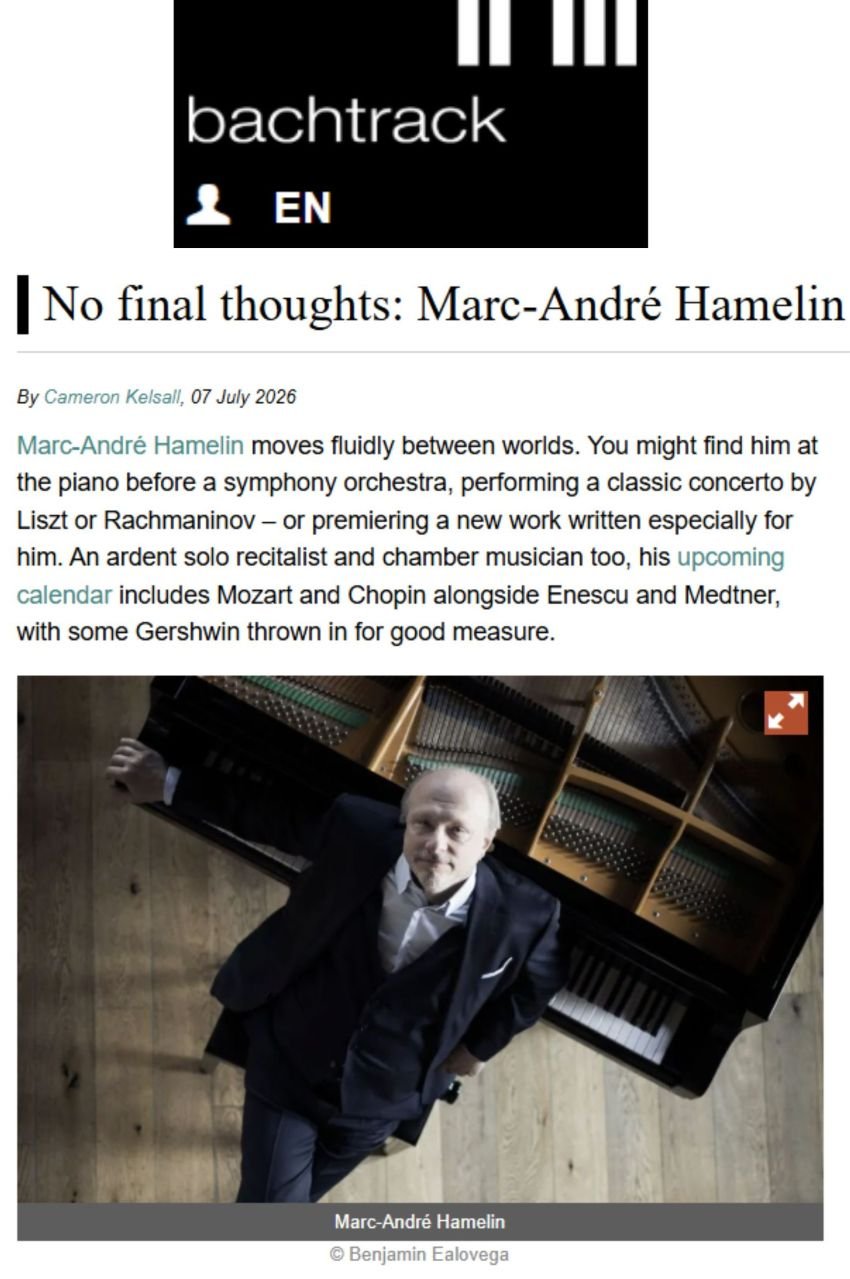
“No final thoughts”: Marc-André Hamelin
Writing for Bachtrack, Cameron Kelsall gives us a snapshot of the fabulous pianist’s career as an interpreter and a composer.
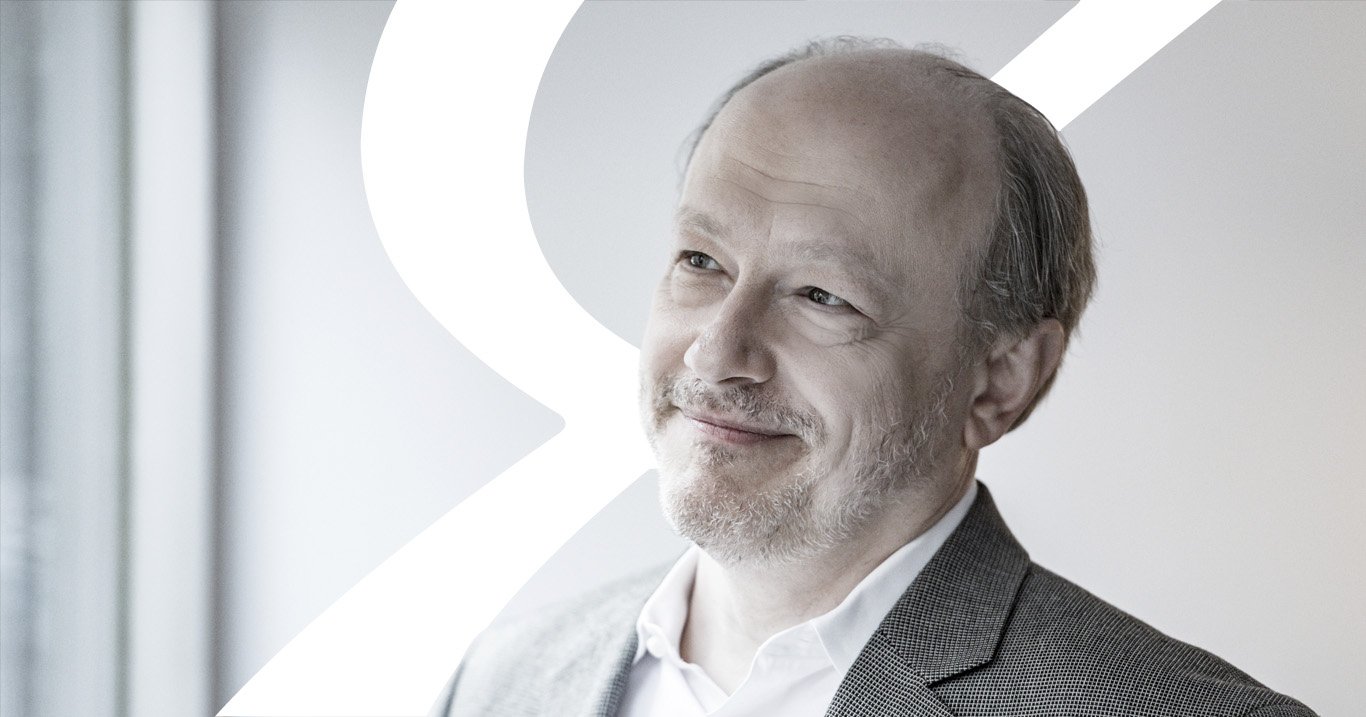
Ahead of his performance with the Singapore Symphony Orchestra in August, Marc-André Hamelin talked with Cameron Kelsall, from Bachtrack.
Hamelin acknowledges that the thrill of live performance, and of classical music in general, comes from the frisson of new discovery possible with even the most familiar of works. “There are always little things that can happen during performances that will give you ideas of how to firm up certain things musically, to give you more understanding within the form,” he says. “These can be very obvious or very subtle. But anything you can come up with will really enrich the musical discourse. I think it can be really delightful when accidents happen – when you do something that you don’t intend to do, but somehow it makes everything sound better. That’s the really exciting aspect of the evolving perception of a piece.”
In recent years, Hamelin has gained a highly regarded reputation as a composer, in addition to his performance career. This blooming part of his career fulfils an interest that stretches back to his earliest days at the piano.
“It started in an extremely primitive way when I started lessons at five years old,” he says. “My father was a very good amateur pianist, and he had some music paper lying around. I was singing his scores, which looked formidable to me, but what do you want to do as a kid? You want to do the same thing. I started scribbling things that probably made no sense, but at least the impulse was there.
Read the full piece here.
Find our more about Marc-André Hamelin here.
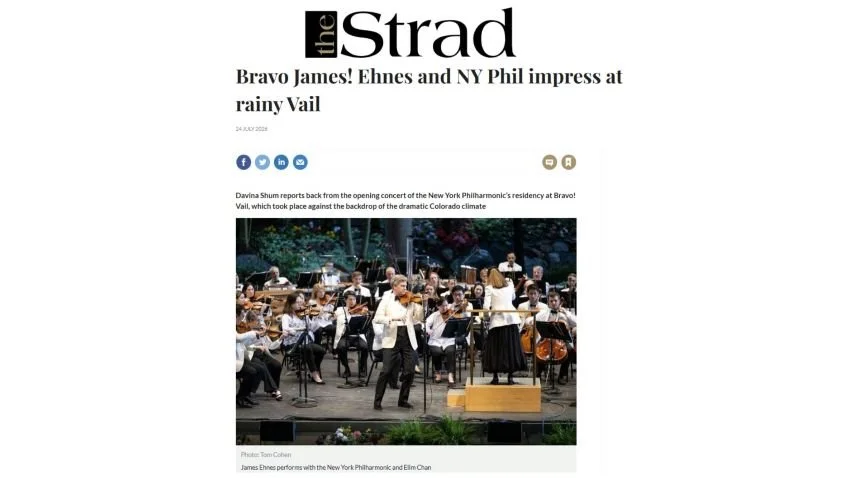
The Strad: Ehnes and NY Phil impress at Bravo! Vail
The Strad reports from the opening concert of the New York Philharmonic’s residency at Bravo! Vail, which took place against the backdrop of the dramatic Colorado climate.
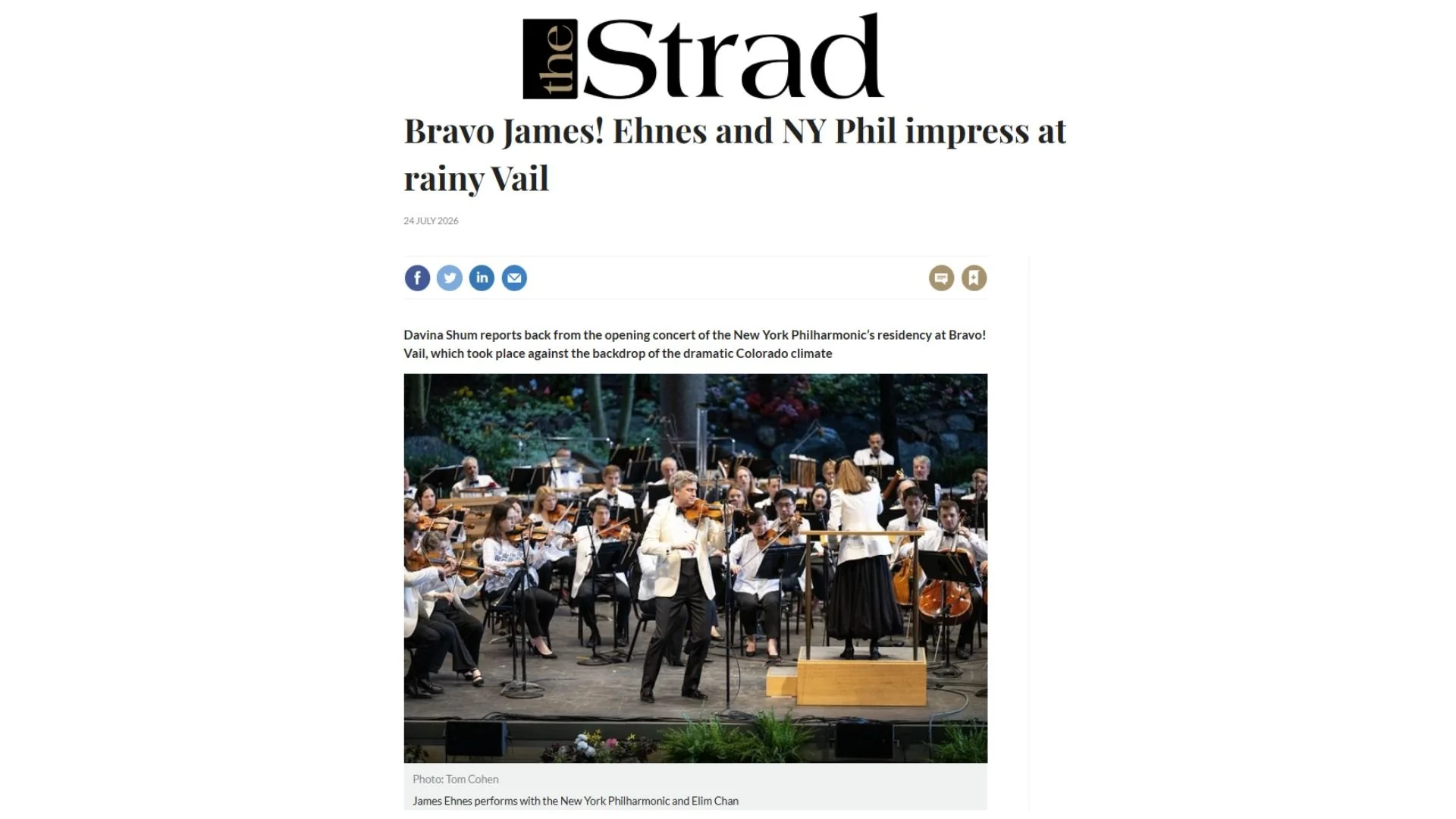
The New York Philharmonic opened its residency at Bravo! Vail Music Festival on July 22 with a program of Berlioz, Korngold, Britten and Stravinsky, under the baton of Elim Chan, in her festival debut.
The orchestra launched into a spirited and jolly rendition of Le Corsaire Overture, a work that showcased Berlioz’s skill of orchestration and programmatic writing. So it was fitting to follow that with Korngold, a composer renowned for his work scoring Hollywood films.
“James Ehnes played the solo part of the Violin Concerto as if he were the protagonist in a hypothetical 20th-century film, with shimmering accompaniment and support from the orchestra,” writes Davina Shum. “His communication was clear between the ensemble and Chan, as he swept through the work’s cinematic lines with apparent ease.”
Read the full piece here.
Visit bravovail.org.

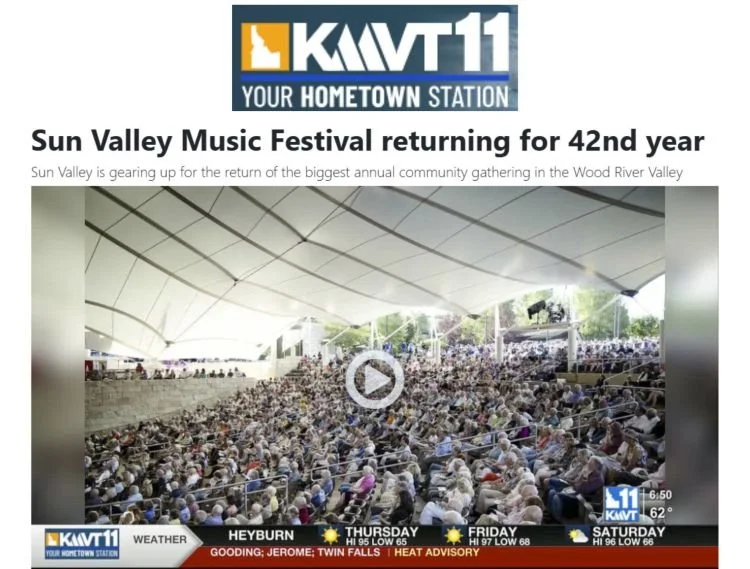
Sun Valley Music Festival Featured on KMVT
Sun Valley is ready for the return of the biggest annual community gathering in the Wood River Valley: Sun Valley Music Festival, which kicks off its 42nd season today. KMVT, in Twin Falls, Idaho, reports.
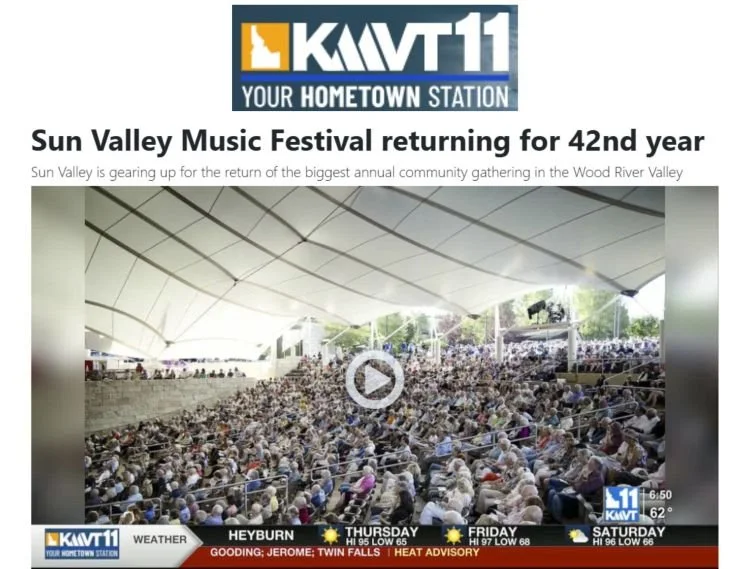
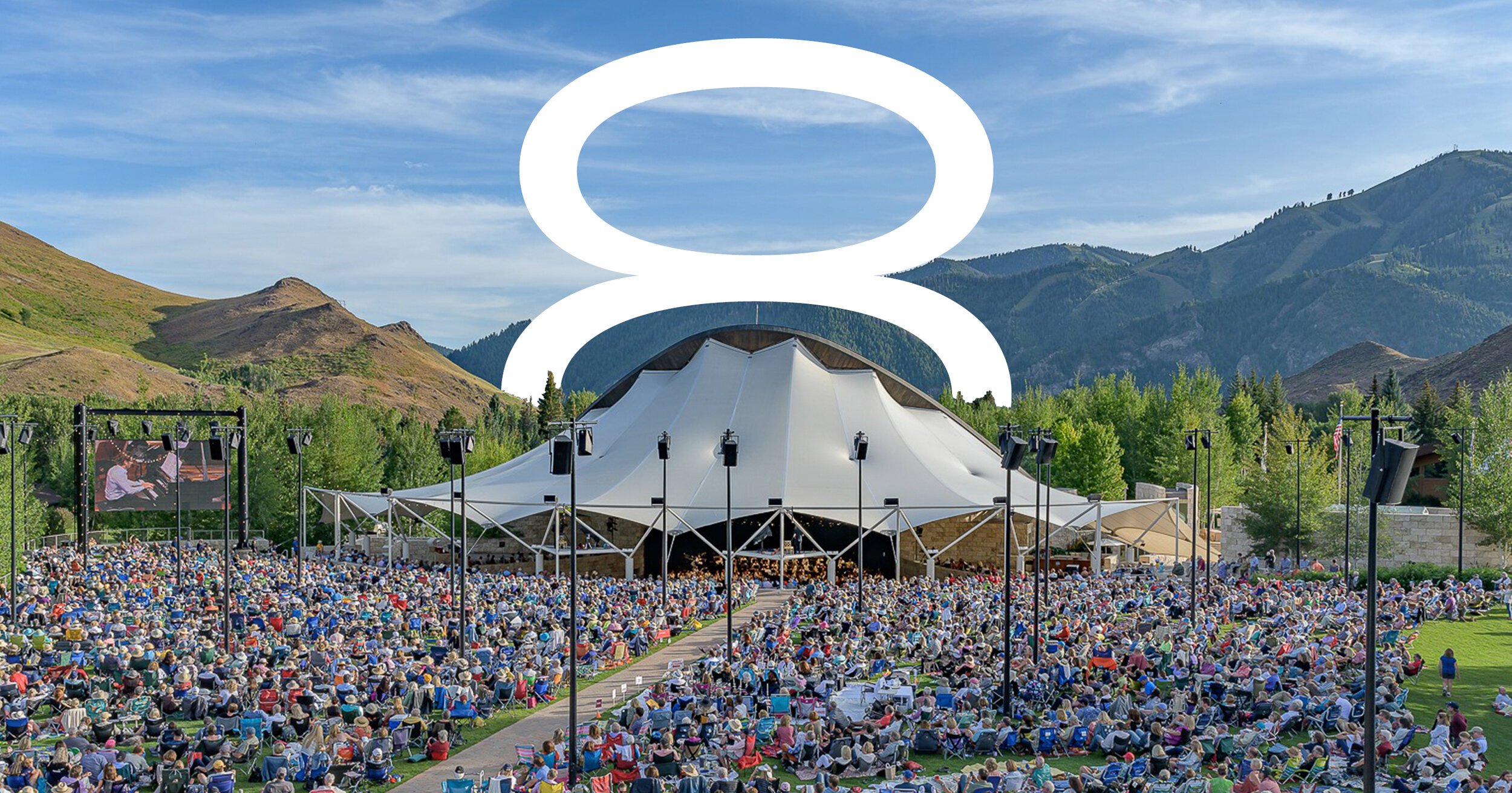
Recognized by BBC Music as one of the best classical music festivals in the country, Sun Valley Music Festival presents exceptional, admission-free concerts in a spectacular setting.
Now in its 42nd year, the three-and-a-half-week long Festival officially kicks off today. Musicians from all over the country will fill the orchestra at the Sun Valley Pavilion, with free classical music concerts scheduled daily at 6:30 p.m.
“The Sun Valley Music Festival really is the biggest community gathering in the Wood River Valley,” Derek Dean, the organization’s executive director, told KMVT. “We have had 11,000 people at a concert, and the population of the valley is 23,000. Everybody comes out for these performances. It is really a thrill to show up at 6 o’clock and see 3,000 people on the lawn.”
Watch the segment here.
Visit the Sun Valley Music Festival website here.

Your Classical: Pianist Min Kwon celebrates "America the Beautiful"
Pianist Min Kwon’s new album, America/Beautiful, comprises 76 new piano works by American composers inspired by the iconic patriotic song “America the Beautiful.” Find out more on New Classical Tracks with host Julie Amacher.

Pianist Min Kwon was 14 when her family immigrated to the U.S. from South Korea. She’s lived in New Jersey since then, and six years ago, she began working on a project titled America/Beautiful. Her position as professor and head of the piano department at Rutgers University has allowed her to amplify this work, which has blossomed into a large-scale project featuring 82 pieces by 76 commissioned composers. The result is a five-volume collection of new piano variations on “America the Beautiful.” Find out more on New Classical Tracks with host Julie Amacher.
Listen to the segment here.
America/Beautiful is available now on Delos. Listen here.
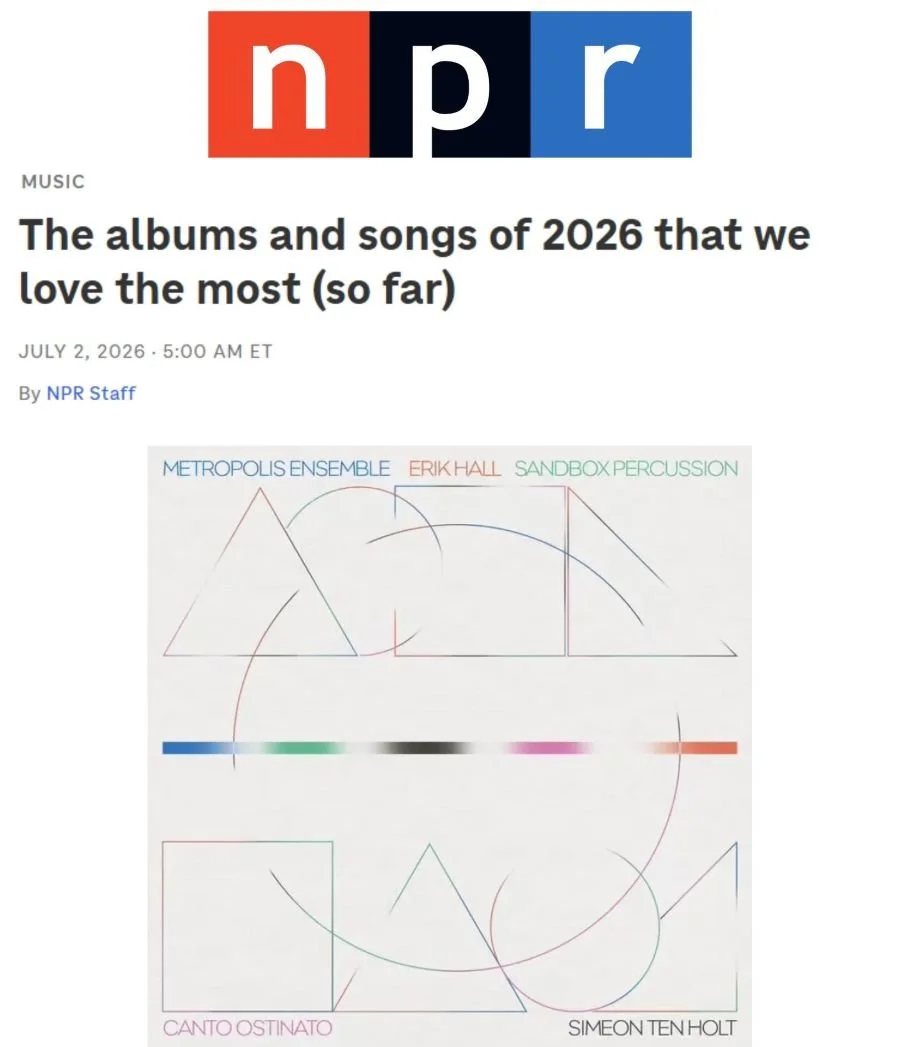
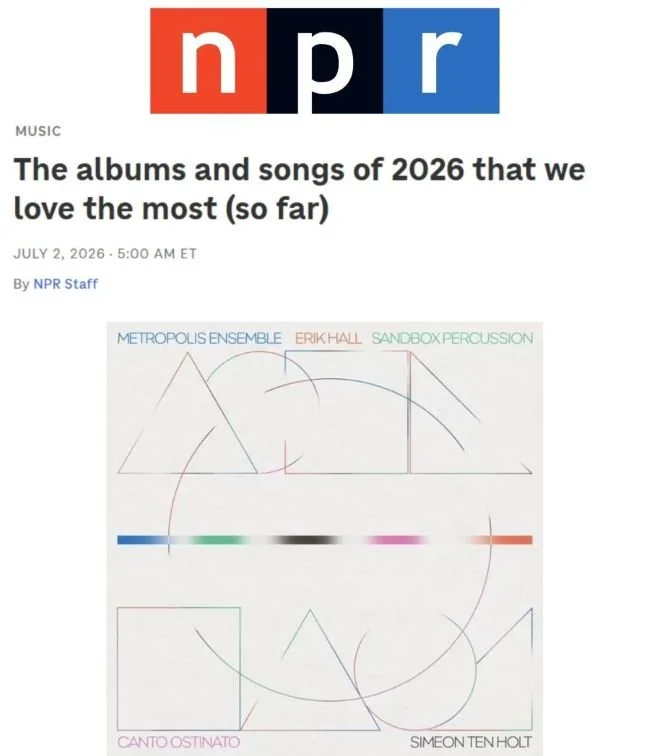
Sandbox Percussion's "Canto Ostinato" album featured on NPR
The recording of a new large-ensemble orchestration of Simeon ten Holt's minimalist masterpiece, featuring Metropolis Ensemble and Erik Hall, was selected by NPR as one of "The albums and songs of 2026 that we love the most (so far)."
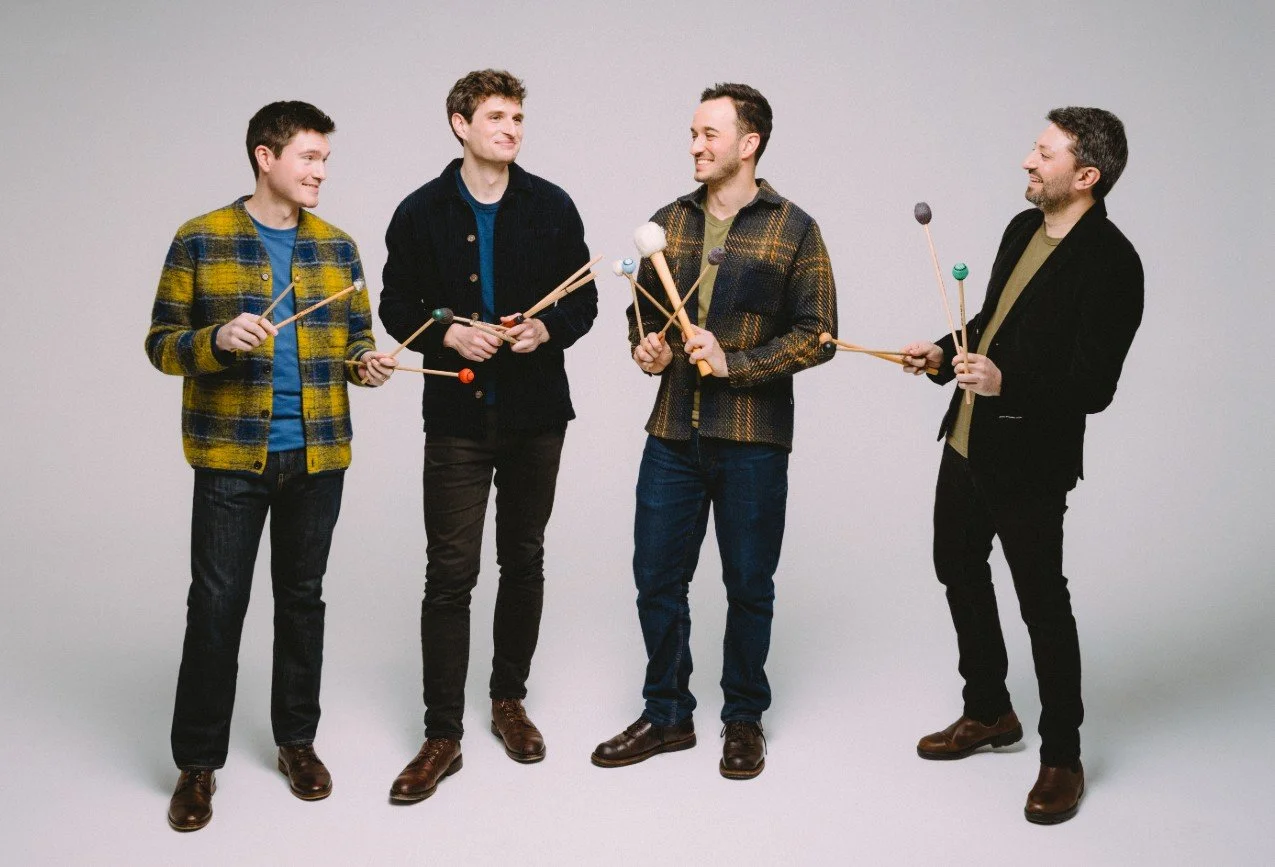
Sandbox Percussion, the GRAMMY-nominated ensemble celebrated for its commitment to contemporary chamber music, partnered with Metropolis Ensemble and Erik Hall to record a new large-ensemble arrangement of Simeon ten Holt's landmark minimalist piece Canto Ostinato.
NPR's Tom Huizenga picked the album (out now on Western Vinyl) for its best-of list for the first half of 2026 (including a wide variety of genres). “Every time I hear it, this 50-year-old piece of Dutch minimalism, composed by Simeon ten Holt, sweeps me off my feet with its meditative, swirling eddies of sound,” he writes.
As in the clock-like cycles of our lives, its rhythms and melodic cells intertwine and recycle. But there's also freedom in the music, as the composer imagined it dressed in various arrangements. This new version, for mallet instruments, winds, strings and piano, undulates with delicate ripples of sound that crest in large waves only to recede and rise again. It's music to get lost in.
Congratulations to Sandbox Percussion, Metropolis Ensemble, and Erik Hall!
Listen to the album here: lnk.to/cantoostinato2026
Check out the full NPR piece here.
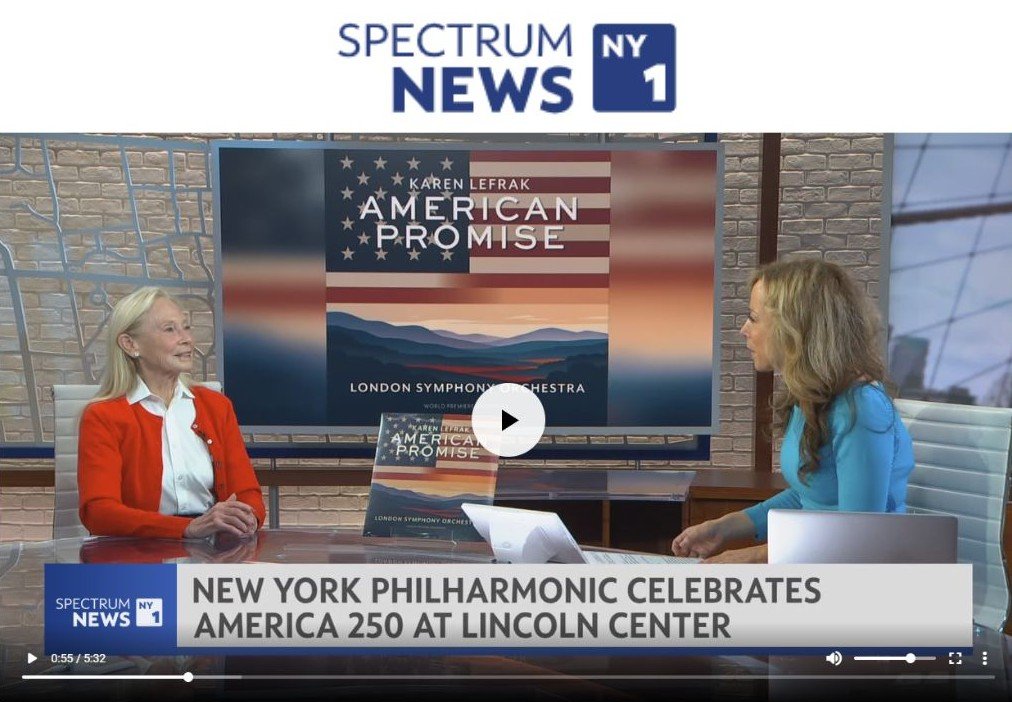
Karen LeFrak on Spectrum News NY1, Ahead of New York Philharmonic Concert
Composer Karen LeFrak talked to Stephanie Simon from Spectrum News NY1, in New York City, about her orchestral work American Promise, which is being performed this weekend by the New York Philharmonic in a program that celebrates the 250th anniversary of the Declaration of Independence.
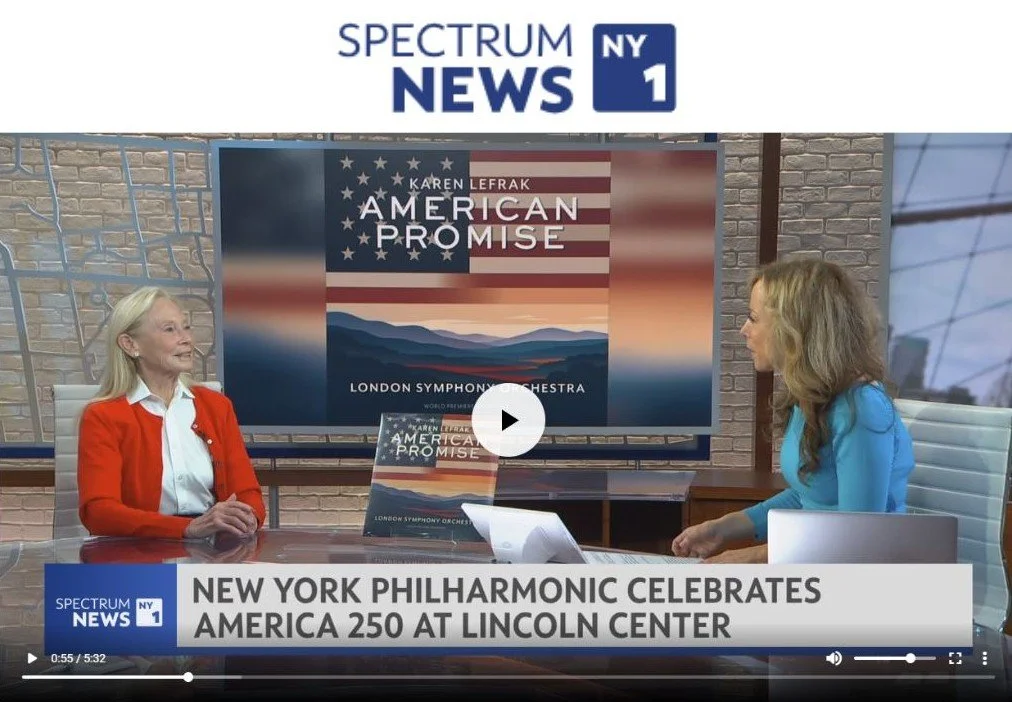
As America gets ready to celebrate its 250th anniversary, New York City will mark the milestone in many ways, including through music. Composer Karen LeFrak, a lifelong New Yorker, talked to Stephanie Simon from Spectrum News NY1 about her new orchestral work American Promise, performed by the New York Philharmonic this Friday at David Geffen Hall.
Inspired by the 250th anniversary of the signing of the Declaration of Independence, Karen wrote American Promise as a reflection on the strength and endurance of the nation—its ongoing fight for liberty and the deep gratitude shared for the opportunities and freedoms it represents.
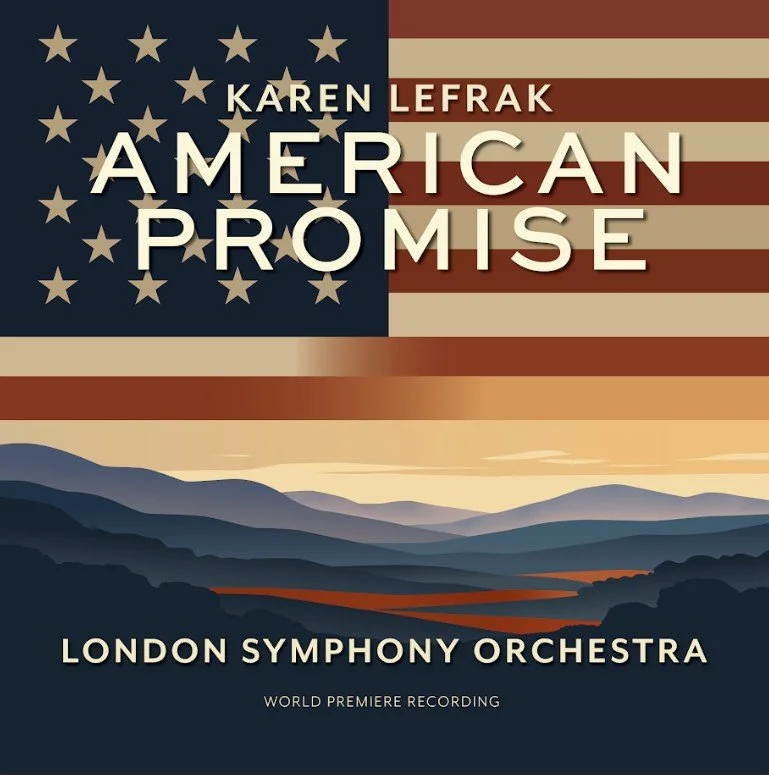
Karen’s recent album features the world-premiere recordings of American Promise and two more new works: Lady Liberty Suite and Prairie Dawn, celebrating hope, arrival, and belonging through sweeping orchestral passages and intimate, lyrical moments. The album was performed by the London Symphony Orchestra, alongside arranger and conductor William Ross, at Abbey Road Studios.
Find out what to expect at the concert and learn about Karen’s creative process by watching the full segment here.
Listen to American Promise here.
Bravo! Vail Music Festival Featured in Vail Valley Magazine
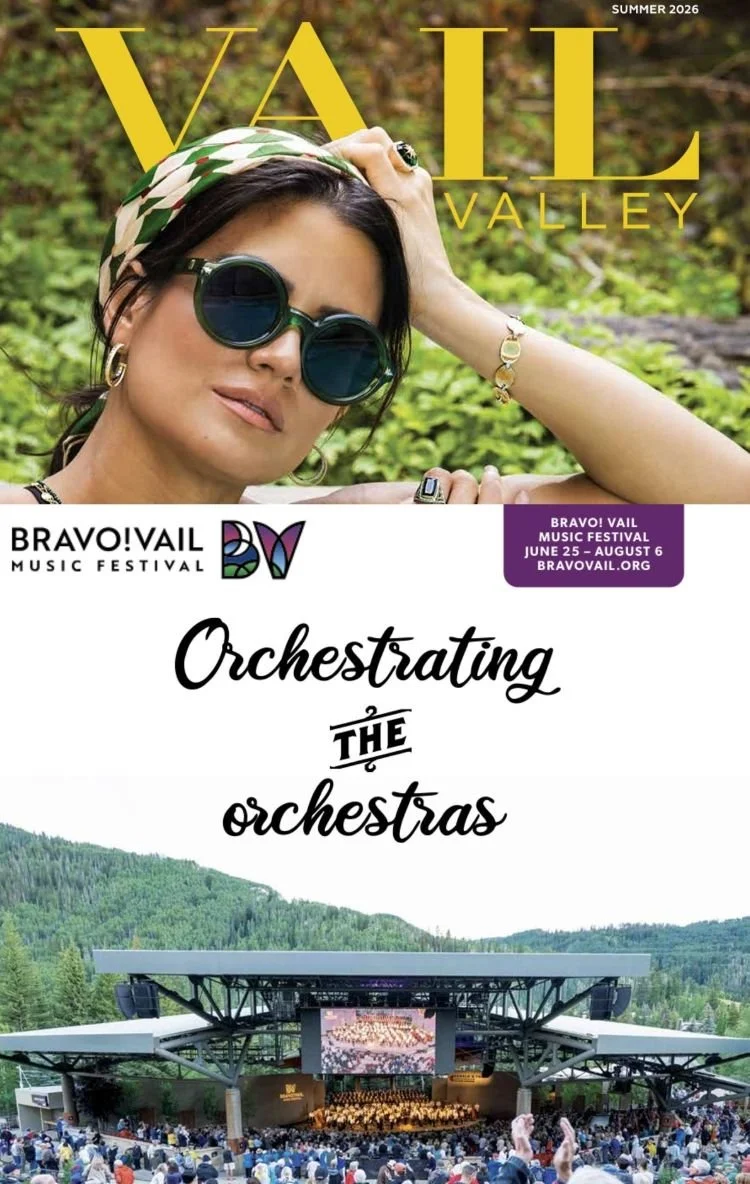
“The Bravo! Vail Music Festival is something of a logistical miracle.” Shauna Farnell details the puzzle of putting together the Bravo! Vail Music Festival, which runs June 25-August 6 this year. Vail Valley Magazine, summer 2026.
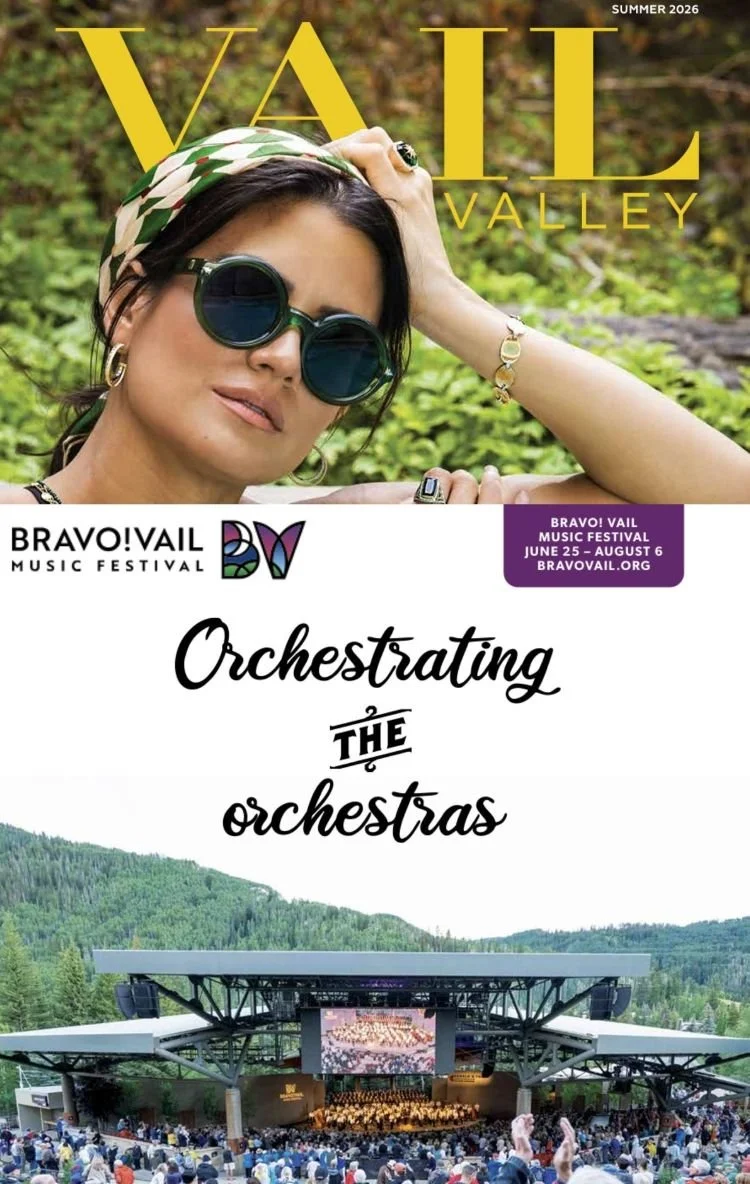
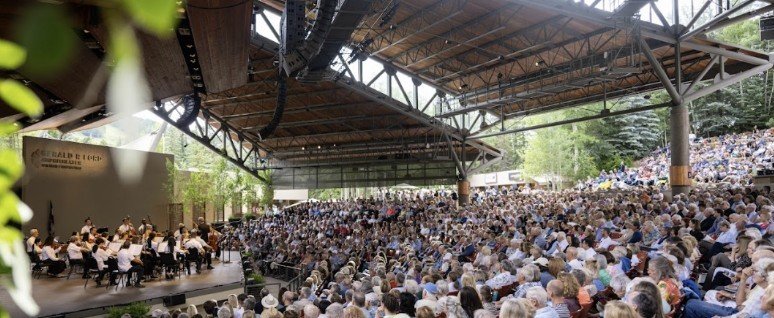
“The Bravo! Vail Music Festival is something of a logistical miracle,” writes Shauna Farnell in her “Orchestrating the Orchestras” feature for the summer 2026 issue of Vail Valley Magazine. She details the puzzle of putting together the Bravo! Vail Music Festival, which runs June 25-August 6 this year, bringing to Vail, Colorado, the New York Philharmonic, the Academy of St Martin in the Fields, the Dallas Symphony Orchestra, the Philadelphia Orchestra, various chamber music ensembles, and more.
“It takes a village,” says Elli Monroe, Bravo! Vail's artistic operations director, about the logistics for putting together this enormous classical music festival. “We have a wonderful team. Honestly, if you can meticulously pre-plan and communicate all of this in advance, 99% goes as planned and you can put out the fires as you need to.”
Planning for the summer begins about a year and a half in advance, with orchestras and soloists contracted out long before that. Monroe, who’s been with the festival since 2008, is tasked with taking the plan, or as she calls it, “the artistic vision,” and bringing it to fruition.
To find out more about Bravo! Vail, please visit bravovail.org.
The Seattle Sound: Seattle Chamber Music Society on Gramophone
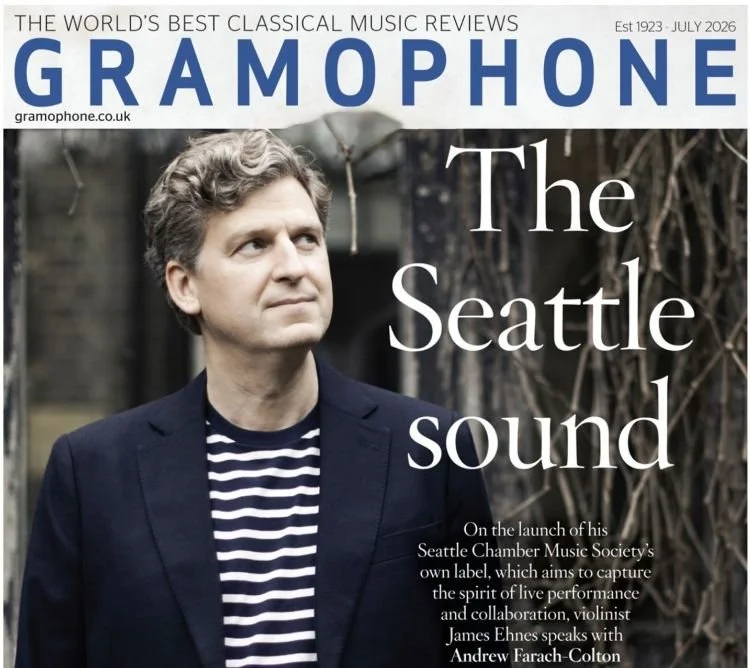
On the launch of SCMS Records, the Seattle Chamber Music Society's label, which aims to capture the spirit of live performance and collaboration, violinist James Ehnes speaks with Gramophone (July 2026 issue).
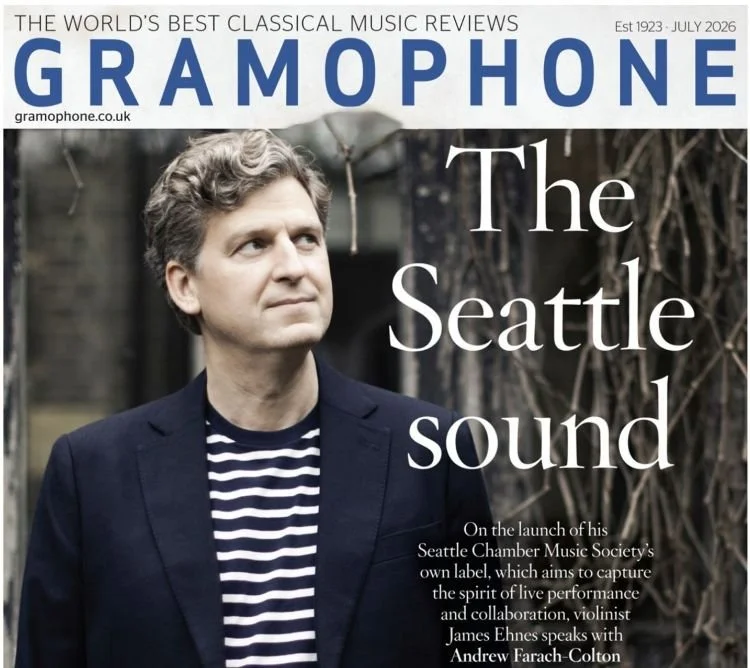
Seattle Chamber Music Society, which brings world-class chamber music to Seattle and beyond, has a virtual concert hall for online viewing as well as extensive outreach programs, including a chamber music academy for younger players, masterclasses, lectures, and a concert truck that brings live performances out into the community. To this, the organization has recently added a record label, SCMS Records. “The creation of this label allows us to capture lightning in a bottle, as they say,” Artistic Director James Ehnes told Andrew Farach-Colton for a new Gramophone feature.
Advocacy for the art form is a huge part of who we are, so it's all about access. If we have a recording we really believe in, that we think is a special representation of a great work of art, and it’s ours — well, then if we want to press a button and send it to a school full of children, we can just do it. It was just too good an opportunity to pass up.
SCMS Records’ third release, recorded in summer 2025 and due out in September, features Cesar Franck’s Piano Quintet.
Read the full piece here.

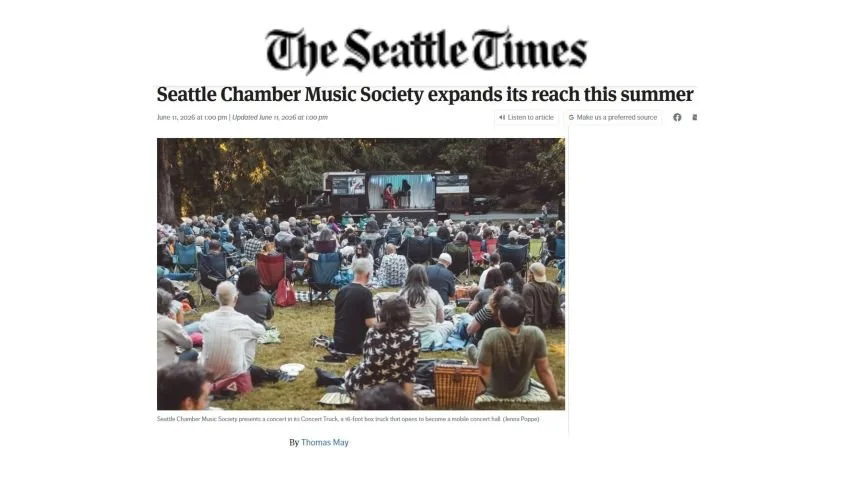
Seattle Times: Seattle Chamber Music Society expands its reach
“Compared with opera or orchestral music, chamber music has always had one practical advantage: It travels light. This summer, the Seattle Chamber Music Society is putting that mobility to work.” Thomas May reports for The Seattle Times
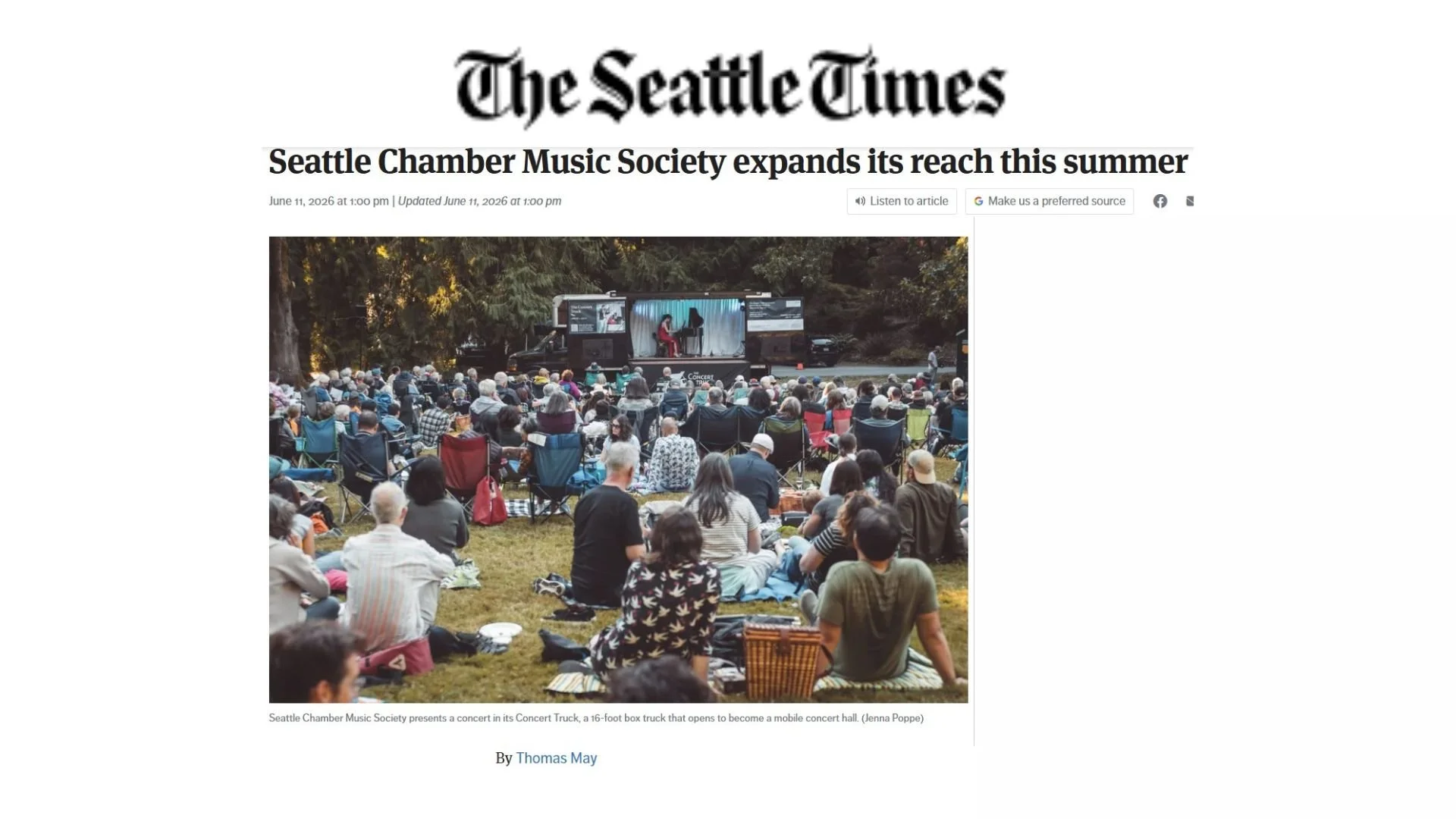
The Seattle Chamber Music Society’s flagship Summer Festival, the world’s largest chamber music party, runs June 18-July 26, 2026. It will no longer be centered at Benaroya Hall, which is undergoing renovations, though a handful of concerts will still take place there. The rest of the mainstage events will migrate outward, to Town Hall Seattle, Meydenbauer Center in Bellevue and venues on Vashon and Bainbridge islands.
Free events will also bring the festival into less formal spaces, including a Chamber Music in the Park concert and community play-along at Volunteer Park on July 18, and more than 20 Concert Truck performances in neighborhoods, parks and other everyday settings across the region.
The programming marks America’s 250th anniversary, with every program including a work connected to the United States, from pieces by Aaron Copland, Samuel Barber, Amy Beach and George Walker to new SCMS commissions by Juhi Bansal and Kian Ravaei.
The season arrives as the organization makes other moves as well: expanding programming beyond the summer festival, introducing its first-ever resident string quartet, and launching an in-house record label, SCMS Records.
Read the full piece here.

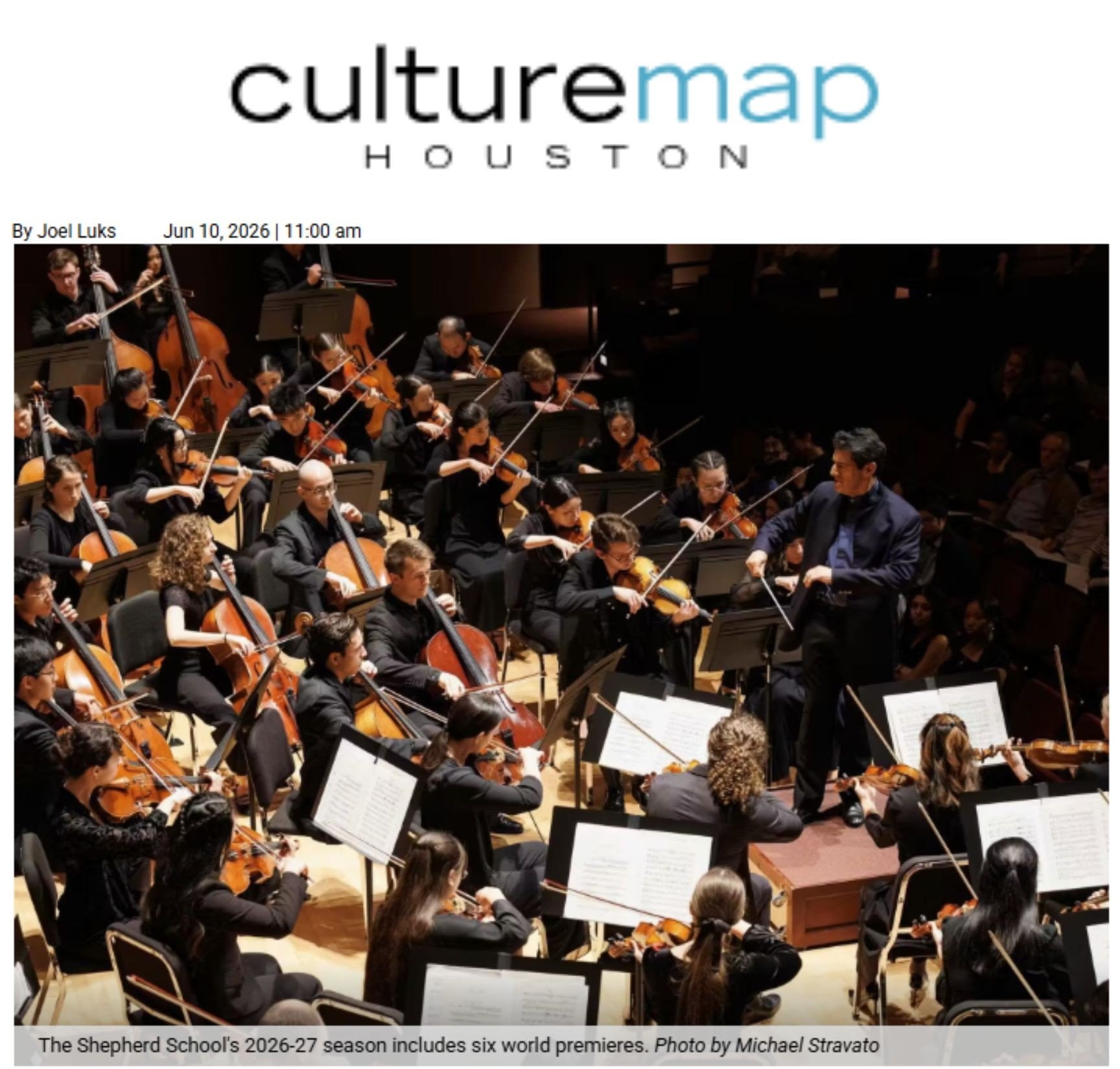
Shepherd School builds on 50 years with a 2026-27 season of discovery
"Doubling down": Culture Map Houston covers the 2026–27 season announcement of the Shepherd School of Music.
The Shepherd School of Music at Rice University announced the orchestral, chamber, opera, and faculty recital programming for its 2026–27 season. The school puts its extraordinary students and faculty on full display in the 2026–27 season, which also includes a Texas premiere and multiple world premieres.
“Fresh off its milestone 50th anniversary, the Shepherd School’s 2026–27 season doubles down on discovery,” writes Joel Luks for Culture Map Houston, highlighting what makes Shepherd special: “Craftsmanship behind moments that can feel effortless once the lights dim and the music begins. That dedication has defined Shepherd for more than 50 years, and the 2026–27 season suggests the next movement is well underway.”
Read the full piece here.
