
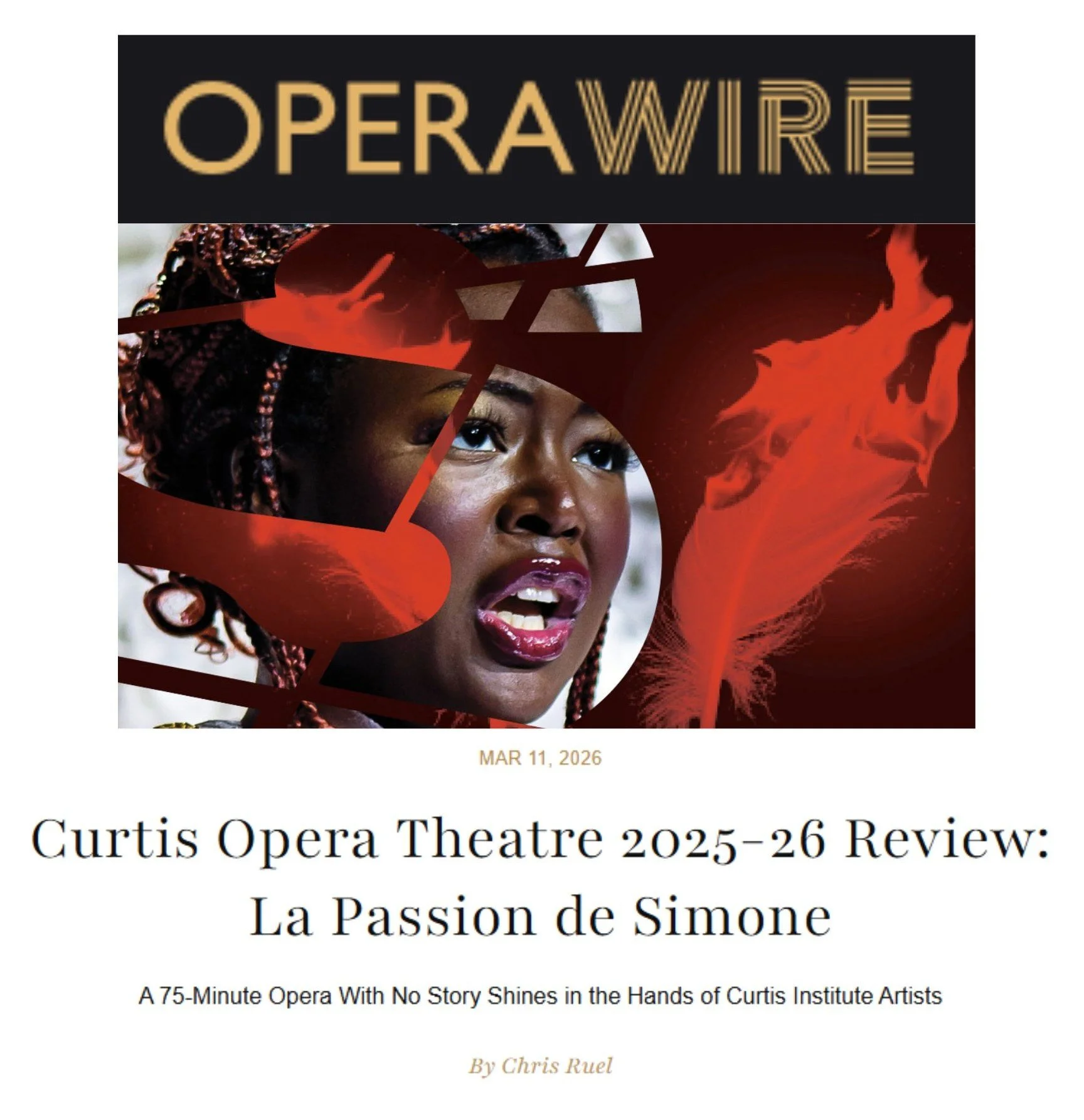
Curtis Opera Theatre's "La Passion de Simone" on OperaWire
“La Passion de Simone doesn’t want to be figured out or even interpreted. Once I stopped fighting my inner voice demanding meaning, something shifted.”
Read the OperaWire review.
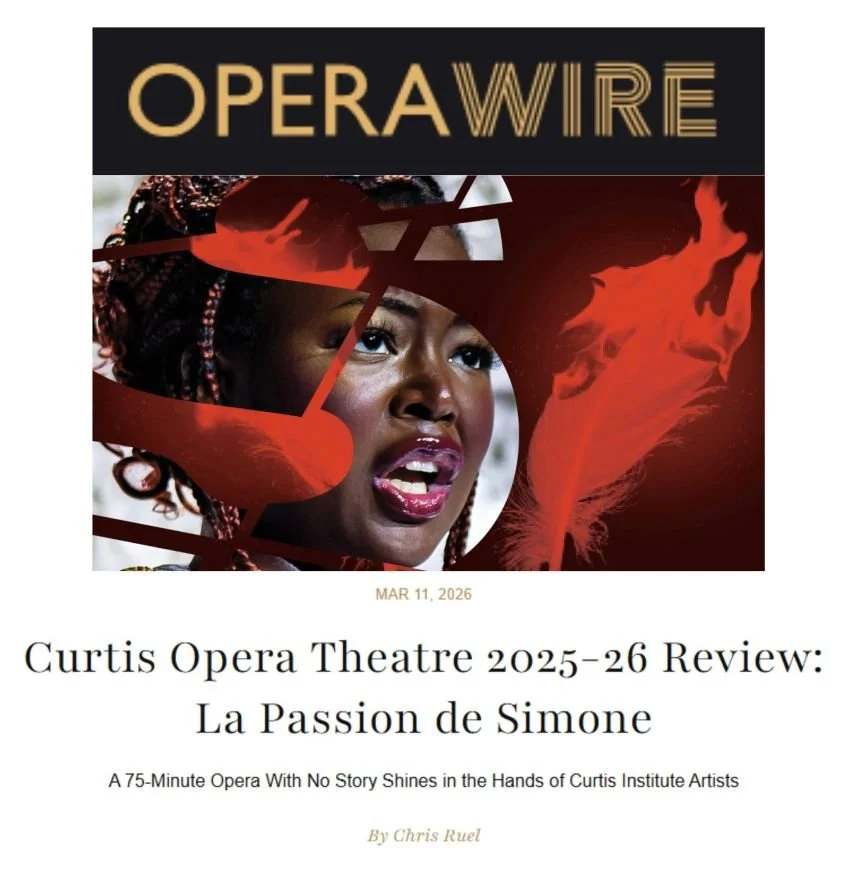
On February 26, 2026, Curtis Opera Theatre, a program of the Curtis Institute of Music, presented something unique. Finnish composer Kaija Saariaho (1952–2023) deliberately stripped away the familiar scaffolding of opera—no heroes, no villains, no tidy narrative arc—and replaced it with something closer to performance art with a score. Sung in French with English supertitles, La Passion de Simone, a “musical journey in 15 stations,” is a 75-minute, no-intermission work that left me genuinely perplexed. In the best way.
The soprano Nikan Ingabire Kanate carried the full 75 minutes as the Narrator, singing without interruption from start to finish. Her stamina was remarkable, her tone clear and bright throughout. With Shields and Oliva building a living atmosphere through light and smoke, Kanate’s striking voice was the constant—the element that held it all together.
The Curtis New Music Ensemble played Saariaho’s demanding score with real skill and feeling. Leading them was conductor Marc Lowenstein.
“This is not music driven by story. It simply asks us to be present.”
Read the full review by Chris Ruel on OperaWire.
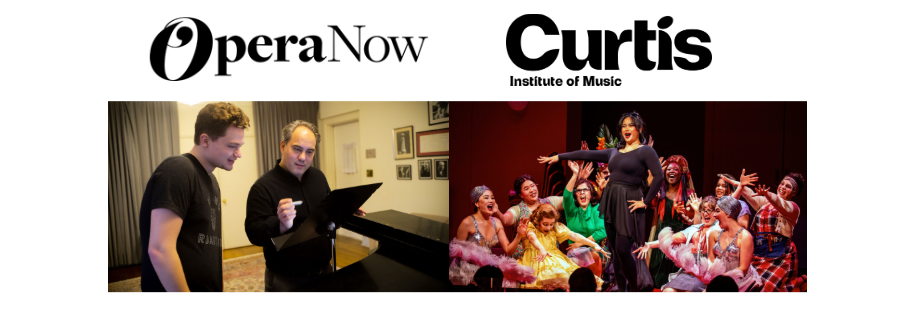
Curtis Opera Theatre Profiled in Opera Now
One hundred years after its founding, the Curtis Institute of Music is still a beacon of excellence for promising young musicians. Hattie Butterworth reports on its opera program, Curtis Opera Theatre, for the latest issue of Opera Now.
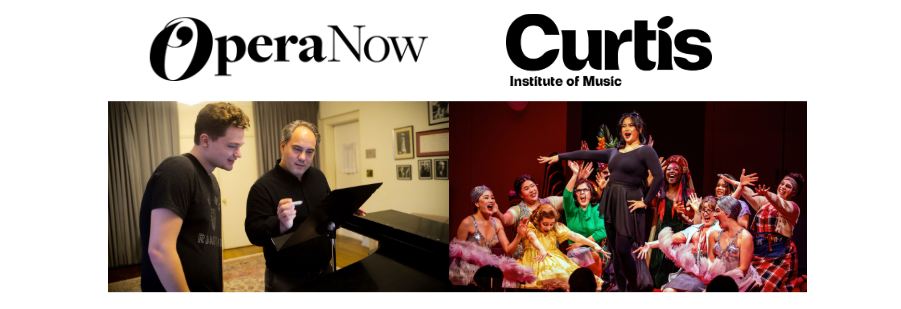
Photo Credits (left to right): Pete Checchia, Wide Eyed Studios
The Curtis Institute was founded in 1924 by Mary Louise Curtis Bok, who “had a bold vision for the music landscape at the time: to create a conservatory where the most promising young musicians could develop their talents without financial barriers.” It boasts a small enrollment of 160, comprising only 25 vocal and opera students. “Because Curtis is smaller, undergraduates and graduate students and post-graduate students all work together in one cohort,” says Miloš Repický, director of the opera department. “They take studio class together, they take acting classes together, they take movement together. They’re in productions together. They need to understand that they’re here to support each other and to be constructive in the learning.”
Curtis also supports the careers of its graduates in numerous ways, including through Curtis Artist Management, which provides management and global representation for a select group of alumni and faculty artists. In May, Curtis announced the signing of the first two singers to the program: Sarah Fleiss and Juliette Tacchino.
Hattie Butterworth visited in April for Curtis’ production of Bernstein’s Candide, directed by Emma Griffin. She writes, “Griffin’s colourful production brought a sense of the connection between singers and ease at which they threw themselves into the operetta’s score.” The 2025-26 season of the Curtis Opera Theatre features productions of Monteverdi’s L’Orfeo, Kaija Saariaho’s La Passion de Simone, and Britten’s A Midsummer Night’s Dream.
“It’s clear Curtis offers a unique gift,” Butterworth writes. “There’s a sense of heritage and tradition with a dedication to the new.”
Read the full article here.
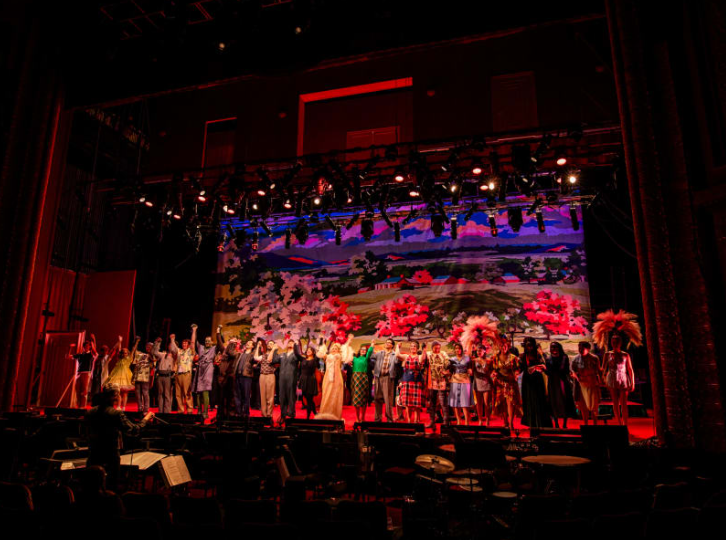
Photo Credits: Wide Eyed Studios

"Curiosity is at the core of human nature" — Roberto Díaz’s life lessons on The Strad
Roberto Díaz, the esteemed president and CEO of the Curtis Institute of Music, shares life lessons with The Strad.
Roberto Díaz is an American–Chilean violist of international reputation and the president and CEO of the Curtis Institute of Music. He discusses the importance of technique and curiosity in the latest issue of The Strad.
“Curiosity is at the core of human nature. I would find it impossible to name one great artist, scientist or engineer who didn’t have a healthy sense of curiosity,” he says. “We often speak to young musicians about the importance of keeping their minds open to opportunities and experiences that may not immediately seem to pay off, or might appear to have very little to do with what they want. I strongly recommend that young players stay open-minded, because you never know.”

Photo by Charles Grove
Read the full piece HERE.

I Care If You Listen: 5 Questions to Trio Zimbalist (piano trio)
Formed in 2021, Trio Zimbalist is a vibrant new piano trio comprised of Curtis alumni Josef Špaček (violin ’09), Timotheos Gavriilidis-Petrin (cello ’17), and George Xiaoyuan Fu (piano ’16). The trio adopted their name from virtuoso violinist Efrem Zimbalist, who served on faculty and as director of the Curtis Institute over 40 years. Much of the trio’s formative time together took place in the room named for Mr. Zimbalist at Curtis, and their connection to the institution remains even after their time there.
I Care If You Listen
By Anne Goldberg-Baldwin
Formed in 2021, Trio Zimbalist is a vibrant new piano trio comprised of Curtis alumni Josef Špaček (violin ’09), Timotheos Gavriilidis-Petrin (cello ’17), and George Xiaoyuan Fu (piano ’16). The trio adopted their name from virtuoso violinist Efrem Zimbalist, who served on faculty and as director of the Curtis Institute over 40 years. Much of the trio’s formative time together took place in the room named for Mr. Zimbalist at Curtis, and their connection to the institution remains even after their time there.
Read more here.

Blogcritics: Concert Review (NYC): Curtis on Tour – Chamber Music by Mozart, Sibelius and More from Some of Curtis Institute’s Finest
Even as the Curtis Institute of Music launches its own record label, the venerable conservatory has not neglected its long-running Curtis on Tour chamber music project. Seven fine Curtis student musicians and two noted professionals joined forces at 92Y in New York City on Dec. 3, performing music by 20th-century composers Erwin Schulhoff and Ernst von Dohnányi as well as Mozart and Sibelius. The music was a lively mix of periods and styles, and a testament to the high quality of Curtis’s programs
Blogcritics
Jon Sobel
Even as the Curtis Institute of Music launches its own record label, the venerable conservatory has not neglected its long-running Curtis on Tour chamber music project. Seven fine Curtis student musicians and two noted professionals joined forces at 92Y in New York City on Dec. 3, performing music by 20th-century composers Erwin Schulhoff and Ernst von Dohnányi as well as Mozart and Sibelius. The music was a lively mix of periods and styles, and a testament to the high quality of Curtis’s programs.
Read more here.

I Care If You Listen: 5 Questions to Alistair Coleman (composer)
Alistair Coleman is taking the classical music world by storm with his vibrant and compelling compositions. Whether writing for string quartet, orchestra and voice, or soloists of all kinds, Coleman channels a capricious and organic musical energy.
Coleman was recently named the 2023 Young Concert Artists Composer in Residence, a highly competitive three-year position that provides $18,000 for three new commissions for YCA artists past and present. Coleman often composes music in dialogue with other media, such as poetry and visual art. Moonshot, for string quartet (2019), is a dramatic and poignant response to three “date paintings” by visual artist On Kawara, which mark the launch, landing, and celebration of Apollo 11’s voyage. Coleman turned to the abandoned designs of illustrious architect Frank Lloyd Wright to create Broadacre City, for flute and string quartet (2022), which opens with an explosion of activity that slowly grinds down until mere vestiges remain. For Gold Girl/Dark Doves (2023), premiered by soprano Ashley Marie Robillard and the Curtis Symphony Orchestra, Coleman set text by Federico García Lorca, replete with haunting symbolism.
I Care If You Listen
By Tristan McKay
Alistair Coleman is taking the classical music world by storm with his vibrant and compelling compositions. Whether writing for string quartet, orchestra and voice, or soloists of all kinds, Coleman channels a capricious and organic musical energy.
Coleman was recently named the 2023 Young Concert Artists Composer in Residence, a highly competitive three-year position that provides $18,000 for three new commissions for YCA artists past and present. Coleman often composes music in dialogue with other media, such as poetry and visual art. Moonshot, for string quartet (2019), is a dramatic and poignant response to three “date paintings” by visual artist On Kawara, which mark the launch, landing, and celebration of Apollo 11’s voyage. Coleman turned to the abandoned designs of illustrious architect Frank Lloyd Wright to create Broadacre City, for flute and string quartet (2022), which opens with an explosion of activity that slowly grinds down until mere vestiges remain. For Gold Girl/Dark Doves (2023), premiered by soprano Ashley Marie Robillard and the Curtis Symphony Orchestra, Coleman set text by Federico García Lorca, replete with haunting symbolism.
Read more here.

Oregon Arts Watch: Choose your own adventure: Oboist Ben Price talks about their life at the Curtis Institute of Music
Discussing American and European oboe styles, musical studies, dry halls and the Curtis Sound with the Portland-raised musician.
Ben Price, age 19, is an oboist in their second year of studies at the Curtis Institute of Music in Philadelphia where they hold the Anderson and Daria Pew Fellowship at Philadelphia’s Curtis Institute of Music. Price performs as a member of the Curtis Symphony Orchestra, and as a soloist and chamber musician in the Curtis Student Recital Series.
…
Oregon ArtsWatch: What led you to playing the oboe?
Ben Price: I had a couple of false starts. I played violin for about five minutes when I was three, but I was more interested in the keychain around my violin teacher’s neck than the violin. I started playing piano when I was five, but the practicing aspect of that turned me off initially. Then I really started studying piano when I was eight. I studied piano with oboe for nine or ten years. We all take piano lessons here at Curtis once a week as well. So, I still study piano, but it became clear pretty early on that oboe would become my primary instrument, especially after I heard a recording of the Philadelphia Orchestra playing Scheherazade. That really got to me.
Oregon Arts Watch
By James Bash
Discussing American and European oboe styles, musical studies, dry halls and the Curtis Sound with the Portland-raised musician.
Ben Price, age 19, is an oboist in their second year of studies at the Curtis Institute of Music in Philadelphia where they hold the Anderson and Daria Pew Fellowship at Philadelphia’s Curtis Institute of Music. Price performs as a member of the Curtis Symphony Orchestra, and as a soloist and chamber musician in the Curtis Student Recital Series.
…
Oregon ArtsWatch: What led you to playing the oboe?
Ben Price: I had a couple of false starts. I played violin for about five minutes when I was three, but I was more interested in the keychain around my violin teacher’s neck than the violin. I started playing piano when I was five, but the practicing aspect of that turned me off initially. Then I really started studying piano when I was eight. I studied piano with oboe for nine or ten years. We all take piano lessons here at Curtis once a week as well. So, I still study piano, but it became clear pretty early on that oboe would become my primary instrument, especially after I heard a recording of the Philadelphia Orchestra playing Scheherazade. That really got to me.
Read more here.

I Care If You Listen: 5 Questions to Nick DiBerardino (composer)
Composer Nick DiBerardino writes music that draws upon programmatic themes, like his percussion quartet Gossamer, a musical reflection on a Walt Whitman poem, or his string quartet Beet Juice, which explores how the vegetable increases our body’s ability to produce energy from oxygen. At the Curtis Institute of Music, DiBerardino is the Chair of Composition and Director of Ensemble 20/21, which focuses on music of the 20th and 21st centuries. In this role, DiBerardino creatively highlights different composers and contemporary music styles by curating programs that span the giants of the past century to living composers from all parts of the globe.
For the 2023-24 season, Ensemble 20/21 will explore Curtis’ macro-theme of “Music of the Earth” through the lens of ecologically-conscious composers such as John Luther Adams, Raven Chacon, Allison Loggins-Hull, Gulli Bjornsson, Luciano Berio, and Curtis alumna Gabriella Smith. The program looks at our world through folklore, culture, and natural themes, and offers a rich addition to Ensemble 20/21’s exciting upcoming season at Curtis.
I Care If You LIsten
By Anne Goldberg-Baldwin
Composer Nick DiBerardino writes music that draws upon programmatic themes, like his percussion quartet Gossamer, a musical reflection on a Walt Whitman poem, or his string quartet Beet Juice, which explores how the vegetable increases our body’s ability to produce energy from oxygen. At the Curtis Institute of Music, DiBerardino is the Chair of Composition and Director of Ensemble 20/21, which focuses on music of the 20th and 21st centuries. In this role, DiBerardino creatively highlights different composers and contemporary music styles by curating programs that span the giants of the past century to living composers from all parts of the globe.
For the 2023-24 season, Ensemble 20/21 will explore Curtis’ macro-theme of “Music of the Earth” through the lens of ecologically-conscious composers such as John Luther Adams, Raven Chacon, Allison Loggins-Hull, Gulli Bjornsson, Luciano Berio, and Curtis alumna Gabriella Smith. The program looks at our world through folklore, culture, and natural themes, and offers a rich addition to Ensemble 20/21’s exciting upcoming season at Curtis.
What drew you to Curtis, and what do you enjoy most about leading Ensemble 20/21?
My first experience with Curtis was as an audience member. This was about a decade ago, when I drove down to Philadelphia to hear new music for orchestra by Curtis’ student composers. I expected the concert to be good, but I wasn’t prepared for what I actually experienced. I left with my jaw on the floor — I was stunned by the caliber of the orchestra, and I was also surprised to hear the wide-ranging aesthetic languages of Curtis’ composers. Each composer had something distinctly personal to say, and the orchestra brought all that music to life with a special energy and commitment.
Read more here.

Your Classical: Pianist Michelle Cann explores the music of Bonds and Price in 'Revival'
Pianist Michelle Cann has had a pretty incredible journey. Her path into the world of piano led her to the Cleveland Institute and the Curtis Institute of Music, which is where she teaches. In 2022, she was the recipient of the Sphinx Medal of Excellence. Now, her journey goes down another life-changing path with the release of her debut recording, Revival: Music of Price and Bonds.
“Growing up, I didn't play any music by any Black composers other than church music. Nothing in the classical field was really ever assigned to me. I wasn't really aware of anyone except for Scott Joplin,” Cann says. “And it wasn't until 2016 that I was introduced to the Florence Price Piano Concerto and I was asked to play it. I'd never heard of her, never heard of the piece, and I read through it. You can only imagine that moment and put yourself in my shoes. I've never been aware of somebody like her in this field.
Your Classical
By Julie Amacher
Pianist Michelle Cann has had a pretty incredible journey. Her path into the world of piano led her to the Cleveland Institute and the Curtis Institute of Music, which is where she teaches. In 2022, she was the recipient of the Sphinx Medal of Excellence. Now, her journey goes down another life-changing path with the release of her debut recording, Revival: Music of Price and Bonds.
“Growing up, I didn't play any music by any Black composers other than church music. Nothing in the classical field was really ever assigned to me. I wasn't really aware of anyone except for Scott Joplin,” Cann says. “And it wasn't until 2016 that I was introduced to the Florence Price Piano Concerto and I was asked to play it. I'd never heard of her, never heard of the piece, and I read through it. You can only imagine that moment and put yourself in my shoes. I've never been aware of somebody like her in this field.
Read more here.

BBC Music Magazine: Revival (Michelle Cann)
Acclaimed pianist Michelle Cann has long been a champion of African-American composer Florence Price, and this fine new recording brings together two substantial works by Price for solo piano alongside Margaret Bonds’s glorious Spiritual Suite.
BBC Music Magazine
By Kate Wakeling
Acclaimed pianist Michelle Cann has long been a champion of African-American composer Florence Price, and this fine new recording brings together two substantial works by Price for solo piano alongside Margaret Bonds’s glorious Spiritual Suite.
Born in Arkansas in 1887 in the midst of the Jim Crow segregation laws, Florence Price showed early talent at the piano and went on to forge a remarkable path as a composer. Her series of Fantasie nègre for solo piano (the first of which was premiered by a young Margaret Bonds), were composed across the 1930s and ’40s: they present a new musical genre which fused elements of European classical music with African-American spirituals. Each of the Fantasie nègre included here is intricately constructed, and Cann’s vivid performances bring out a terrific depth of emotion – among many such fine moments, the final rendition of the spiritual ‘Sinner, Please Don’t Let This Harvest Pass’ in No. 1 is breathtakingly powerful. Price’s Piano Sonata in E minor is every bit as accomplished and Cann’s reading is poised yet vital, drawing out the work’s vibrant polyrhythms and creating a wonderful sense of line in the luscious slow movement.
Read more here.