
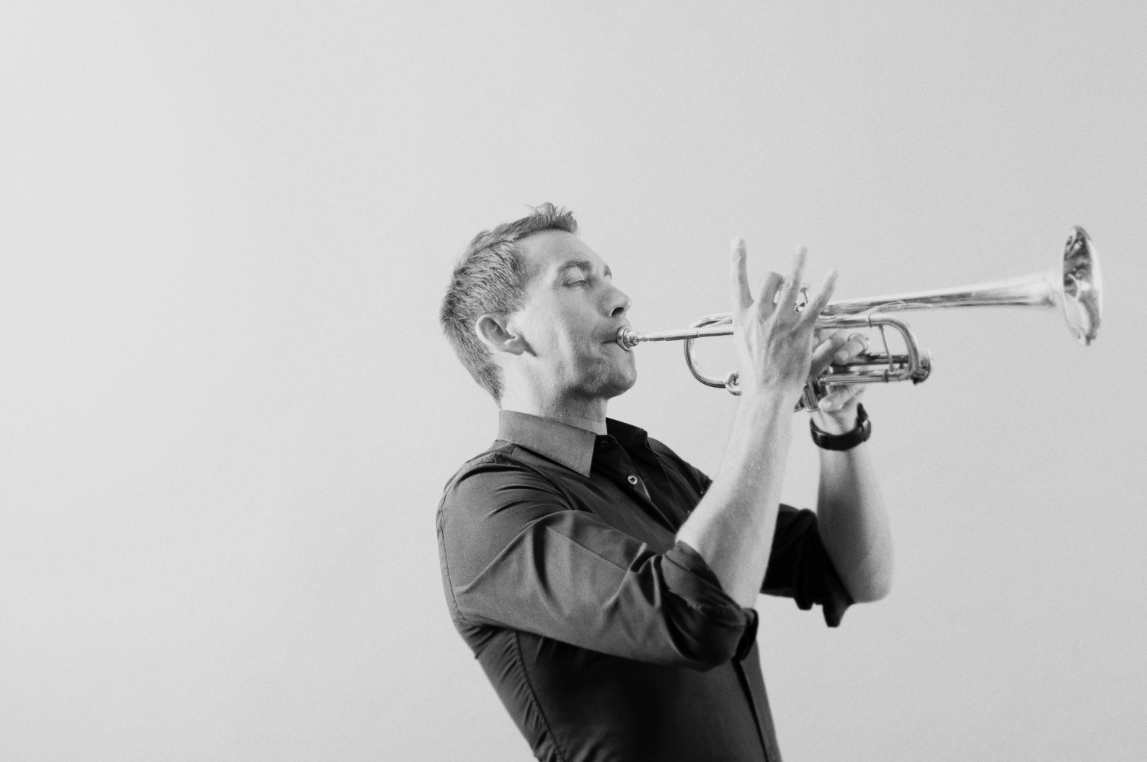
BBC In Tune: Paul Merkelo
Trumpeter Paul Merkelo joined Katie Derham on BBC Radio 3 In-Tune ahead of his performance with the English Chamber Orchestra to chat about the program, performing in the age of COVID, recent recordings, and more. Also included are excerpts from the Haydn, Tomasi, and Hummel trumpet concertos.
BBC In Tune
Trumpeter Paul Merkelo joined Katie Derham on BBC In-Tune ahead of his performance with the English Chamber Orchestra to chat about the program, performing in the age of COVID, recent recordings, and more. Also included are excerpts from the Haydn, Tomasi, and Hummel trumpet concertos.
Listen here until February 20, beginning at 11:00.

The New York Times: Listen to Keyboard Music by Bach (No, Not That One)
The subject of the pianist Marc-André Hamelin’s latest album is Bach — no, not that one.
Hamelin — ever inquisitive in exploring the outer reaches of the repertoire, with recent releases of music by Sigismond Thalberg, Samuil Feinberg and Erno Dohnanyi — has now turned to the extraordinary range of keyboard works by Carl Philipp Emanuel Bach, Johann Sebastian’s second surviving son.
The New York Times
By David Allen
The subject of the pianist Marc-André Hamelin’s latest album is Bach — no, not that one.
Hamelin — ever inquisitive in exploring the outer reaches of the repertoire, with recent releases of music by Sigismond Thalberg, Samuil Feinberg and Erno Dohnanyi — has now turned to the extraordinary range of keyboard works by Carl Philipp Emanuel Bach, Johann Sebastian’s second surviving son.
C.P.E. Bach was a prolific composer and an important pedagogue, a significant influence on Haydn, Mozart and Beethoven. (Hamelin’s new album is a welcome companion to the three volumes of solo Haydn that he set down, with ideal panache, a decade and more ago on the Hyperion label.) But if he was more widely appreciated than his father well into the 19th century, that has certainly not been the case more recently.
Read more here.

The New York Times: 5 Things to Do This Weekend
The pianist Marc-André Hamelin has a penchant for choosing unfamiliar repertoire. In doing so, his quicksilver playing has sometimes helped elevate the reputation of a neglected composer. His latest release on the Hyperion label is devoted to pieces by Carl Philipp Emanuel Bach. And while you might not deem C.P.E. obscure, exactly — what with being the most famous of Johann Sebastian Bach’s sons — these works are hardly overfamiliar.
The New York Times
By Seth Colter Walls
The pianist Marc-André Hamelin has a penchant for choosing unfamiliar repertoire. In doing so, his quicksilver playing has sometimes helped elevate the reputation of a neglected composer. His latest release on the Hyperion label is devoted to pieces by Carl Philipp Emanuel Bach. And while you might not deem C.P.E. obscure, exactly — what with being the most famous of Johann Sebastian Bach’s sons — these works are hardly overfamiliar.
Read more here.

Blogcritics: Interview: Wray Armstrong and Evita Zhang of Armstrong Music & Arts on Bridging the China-West Cultural Divide
Cultural exchange has long served as a counterweight to international tensions. Though the COVID-19 pandemic has reminded us how nations are prone to cooperate poorly, purveyors of the arts persist in working to increase understanding and collaboration. Armstrong Music & Arts builds cultural bridges between China and the West through touring and management for artists and organizations in the West and in China, and by discovering and nurturing talented Chinese artists.
Blogcritics
By Jon Sobel
Cultural exchange has long served as a counterweight to international tensions. Though the COVID-19 pandemic has reminded us how nations are prone to cooperate poorly, purveyors of the arts persist in working to increase understanding and collaboration. Armstrong Music & Arts builds cultural bridges between China and the West through touring and management for artists and organizations in the West and in China, and by discovering and nurturing talented Chinese artists.
Read more here.

The San Diego Union-Tribune: The Queen’s Cartoonists can make a jazz lover out of anyone
As Joel Pierson can attest, most young people would say they do not like jazz or classical music — genres that seem inaccessible, out-of-date or stuffy. That’s why he formed The Queen’s Cartoonists, a live band that plays music synchronized to classic and contemporary animation.
The San Diego Union-Tribune
By Nina Garin
Hey, kids! Do you like jazz music?
As Joel Pierson can attest, most young people would say they do not like jazz or classical music — genres that seem inaccessible, out-of-date or stuffy. That’s why he formed The Queen’s Cartoonists, a live band that plays music synchronized to classic and contemporary animation.
“There’s a lot of stigma against jazz and classical music,” he says. “There’s this sense of ‘Oh, that’s not for me’ or ‘it’s too complicated’ and I don’t think that’s true. I think we just need the right kind of exposure. You know, cartoons were created introducing classical music to people — everyone learned some Wagner and Rossini from Bugs Bunny and that kind of stuff. So I thought maybe I could do that with musicians and a band.”
Read the full article here.

Strings Magazine: The Juilliard String Quartet Remains at the Nexus of Continuity and Change as it Celebrates Its 75th Anniversary
The endurance of the Juilliard String Quartet (JSQ) seems to offer a potent antidote to the sense of impending disruption and uncertainty that has crept into just about every aspect of musical life. This longevity shines a beacon of hope, enhancing the sense of celebration around the internationally acclaimed ensemble’s 75th anniversary this season.
Strings Magazine
By Thomas May
The endurance of the Juilliard String Quartet (JSQ) seems to offer a potent antidote to the sense of impending disruption and uncertainty that has crept into just about every aspect of musical life. This longevity shines a beacon of hope, enhancing the sense of celebration around the internationally acclaimed ensemble’s 75th anniversary this season.
Among the plans is a concert on November 30 at Alice Tully Hall in Lincoln Center titled “Cavatina,” which presents a new commission series from the prolific German composer Jörg Widmann, whose work will interact with Beethovenian models. This will be juxtaposed with Beethoven’s late String Quartet No. 13 in B-flat major. The ensemble will perform both finales the composer fashioned for Op. 130, including the Grosse Fuge originally intended as the capstone. This dual focus on core classic repertoire and new creation has consistently been part of the JSQ’s DNA.
Read more here.

The New York Times: One Composer, Four Players, ‘Seven Pillars’
Andy Akiho’s 11-part, 80-minute new work for percussion quartet is a lush, brooding celebration of noise.
The industrial stretch of south Brooklyn where Sandbox Percussion makes its home was nearly silent on a cool, clear Sunday afternoon at the end of September. Not so inside, where the Sandbox quartet had put in earplugs to rehearse Andy Akiho’s clangorous “Seven Pillars,” a lush, brooding celebration of noise.
Akiho, 42, an increasingly in-demand composer who rose as a steel pan virtuoso, sat watching, with a surfer’s laid-back demeanor but intently focused. He isn’t part of the group, but over the years has grown so close with its members, and has spent so much time in their studio, that he installed an espresso machine to fuel his work marathons there.
The New York Times
By Zachary Woolfe
Andy Akiho’s 11-part, 80-minute new work for percussion quartet is a lush, brooding celebration of noise.
The industrial stretch of south Brooklyn where Sandbox Percussion makes its home was nearly silent on a cool, clear Sunday afternoon at the end of September. Not so inside, where the Sandbox quartet had put in earplugs to rehearse Andy Akiho’s clangorous “Seven Pillars,” a lush, brooding celebration of noise.
Akiho, 42, an increasingly in-demand composer who rose as a steel pan virtuoso, sat watching, with a surfer’s laid-back demeanor but intently focused. He isn’t part of the group, but over the years has grown so close with its members, and has spent so much time in their studio, that he installed an espresso machine to fuel his work marathons there.
“That’s my bedroom,” he said, pointing to a tiny soundproofed recording space walled off in the corner.
Akiho has written substantial works for steel pan, for percussion, for marimba and string quartet, for snare drum and sampled dog barking, and many other configurations — even a concerto for onstage Ping-Pong players and orchestra. But “Seven Pillars” is a breakthrough for him, in its 80-minute length and its conceptual complexity.
Read more here.

Opera Wire: Conductor Steven Fox on the Clarion Choir, ‘Judas Maccabeus’ & Live Performances
On Dec. 1, the Clarion Choir and Clarion Orchestra will join forces for a free concert with Isabel Leonard and Anthony Roth Costanzo to perform a suite from “Judas Maccabeus” at historic Temple Emanu-El in celebration of Hanukkah.
The program will also include arias, duets, and choruses from Händel’s “Esther,” “Israel in Egypt,” and “Rodelinda.”
OperaWire had a chance to speak with conductor and Clarion Artistic Director Steven Fox about returning to the live performances and taking on Händel’s “Judas Maccabeus.”
Opera Wire
By Francisco Salazar
On Dec. 1, the Clarion Choir and Clarion Orchestra will join forces for a free concert with Isabel Leonard and Anthony Roth Costanzo to perform a suite from “Judas Maccabeus” at historic Temple Emanu-El in celebration of Hanukkah.
The program will also include arias, duets, and choruses from Händel’s “Esther,” “Israel in Egypt,” and “Rodelinda.”
OperaWire had a chance to speak with conductor and Clarion Artistic Director Steven Fox about returning to the live performances and taking on Händel’s “Judas Maccabeus.”
OperaWire: This is a return to holiday season concerts after the pandemic. How does it feel to be performing for a live audience after so long?
Steven Fox: It’s very exciting to be going in front of a live audience again. We have done some small concerts in recent months, but this will be our first Clarion production for a large audience, and we are all thrilled about it. I admire how creative musicians were in producing online content during the pandemic. But there is simply no replacement for live music. The energy that the audience brings, and the spontaneity of the performances that happen as a result of that, are part of the magic that makes us performers love to perform.
Read more here.

Pianist Magazine: Tianxu An’s time is here: The pianist talks about his quest for success
Tianxu An’s time is here: The pianist talks about his quest for success
In 2019, Tianxu An fell victim to a terrible error in the final of the International Tchaikovsky Competition. With the pianist expecting to play one piece, the accompanying orchestra started playing a completely different piece. Two years on, he's back and ready to aim for the stars.
Pianist Magazine
By Ellie Palmer
Tianxu An’s time is here: The pianist talks about his quest for success
In 2019, Tianxu An fell victim to a terrible error in the final of the International Tchaikovsky Competition. With the pianist expecting to play one piece, the accompanying orchestra started playing a completely different piece. Two years on, he's back and ready to aim for the stars.
Can you tell us a little bit about your musical background and what led you to pursue a career as a solo pianist?
I come from a non-musical family. My parents initially thought that playing piano would be a good way to help us kids develop our intelligence so they enrolled us in lessons. Since I had no musical knowledge at that time, my attitude was neutral. Thanks to my studies at the elementary and the middle school affiliated to Central Conservatory of Music in Beijing, I began to love music and became more interested in playing the piano.
I am currently studying at the Curtis Institute of Music in Philadelphia, which gives me a closer connection with the western culture and environment. My experiences have showed me how music is a powerful language which establishes the deeply emotional bond among people that surpasses the limits of verbal language on its own. Because people’s lives nowadays are more occupied by electronic devices, the emotional bond mentioned above is rarer and thus more valuable. I want to use the piano as a tool to reconstruct that intimate connection with people, which is why I have continued pursuing this career.
While many musicians were still in quarantine, your new China-based manager Armstrong Music & Arts/Poly Armstrong organised a 19-city recital tour. Can you tell us about your recital programme and experience returning to performing for live audiences?
I prepared two programmes with some overlapping pieces. The repertoire includes Beethoven Op 110, Brahms Sonata Op 1 and Prokofiev Sonata No 6. Other works include selections from Rachmaninov's and Debussy’s preludes. I have been so lucky to have consistent performance engagements throughout this difficult time and I treasure each opportunity to play onstage. I give each of my performances my all and feel so grateful for the enthusiasm I’ve received from audiences.
Read more here.

Musical America: New Artist of the Month: Violist Jesús Rodolfo
At heart, Jesús Rodolfo is a storyteller who uses four strings and a bow to give voice to his restless imagination. The young Spanish violist constantly returns to the model of narrative—even when discussing music as formally abstract as Paul Hindemith’s sonatas for the instrument, which rank among his favorites. Two of his albums to date are devoted to the composer’s sonatas (those with piano accompaniment and the solo viola sonatas).
Musical America
By Thomas May
At heart, Jesús Rodolfo is a storyteller who uses four strings and a bow to give voice to his restless imagination. The young Spanish violist constantly returns to the model of narrative—even when discussing music as formally abstract as Paul Hindemith’s sonatas for the instrument, which rank among his favorites. Two of his albums to date are devoted to the composer’s sonatas (those with piano accompaniment and the solo viola sonatas).
Read more here.