

Violin Channel: Julian Schwarz Guest Blogs about Schoenfeld International String Competition
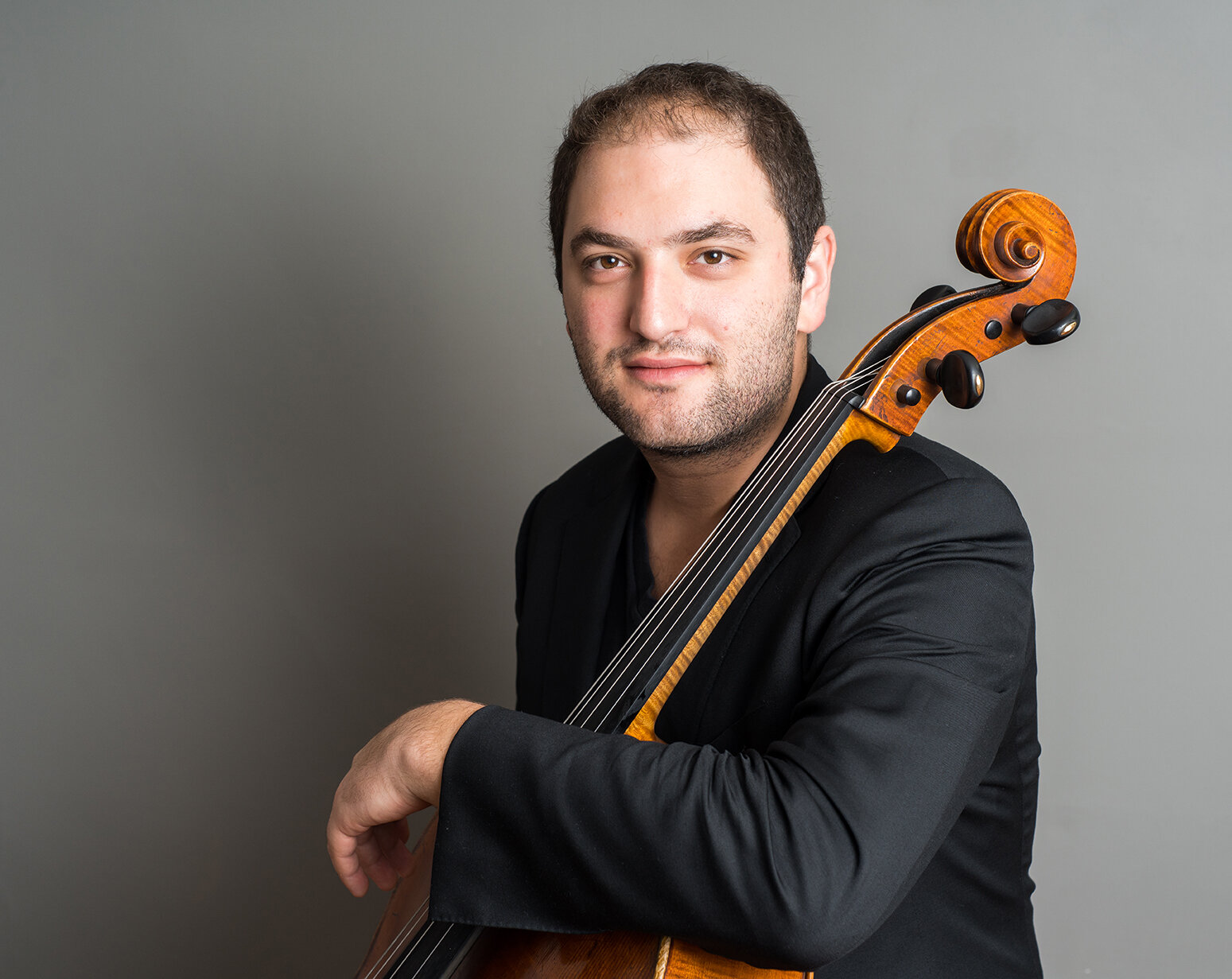
With the 2016 Schoenfeld International String Competition underway this week in Harbin, China, VC recently caught up with a number of former prize winners to get a better understanding of their time at the competition – and the career-changing opportunities the biennial event has presented. 2013 Cello Division 1st prize winner, Julian Schwarz guest blogs about his eventful experience:

With the 2016 Schoenfeld International String Competition underway this week in Harbin, China, VC recently caught up with a number of former prize winners to get a better understanding of their time at the competition – and the career-changing opportunities the biennial event has presented.
2013 Cello Division 1st prize winner, Julian Schwarz guest blogs about his eventful experience:
“In 2004 I had the great honor of performing in a masterclass given by the distinguished cellist Eleanor Schoenfeld. I had heard wonderful things about her teaching, and was eager for the opportunity. She was a very elegant woman. Her German accent was subtle yet intriguing, as was her graceful playing. Little did I know that nine years later her namesake competition would prove such an important part of my young career.
A week in August 2013 was the first installment of the inaugural Alice and Eleanor Schoenfeld International String Competition (then in Hong Kong, now in Harbin). Though I had made the effort to apply and officially enter the competition, I was reticent to make the trek. The timing was not ideal, as the competition was set to take place following my first summer as a faculty member at the Eastern Music Festival, which directly preceded a residency at the piano Sonoma Festival in California. I had the usual pre-competition thoughts and fears—what if I go all the way there and get cut in the first round? When will I find time to prepare the compulsory piece?
My response to these fears was to put off buying my plane tickets and focus on my work at hand. The days hurried by. The competition was right around the corner and I had neither began learning the required piece nor booked any travel or accommodation whatsoever. Decision time. I bought my tickets. I figured that I would somehow find a way to prepare the necessary repertoire if I had no choice but to step on that plane.
On the day of my flight to Hong Kong, I found myself in a state of palpable stress. I had yet to look at the commissioned piece. I told myself to focus on my concert that afternoon and worry about the competition on the way to the airport (I was catching a 1 am flight after a late afternoon chamber performance in Sonoma).
The flight was long, but allowed me to study the repertoire over my breakfast of seafood congee. It was my first time in Hong Kong, but I promised myself I would not let my desire to enjoy the town get in the way of my preparation. I checked into the hotel and started to practice. It turned out that nature had its own way of insuring my practice captivity—it was typhoon time. Yes, the whole city was filled with rivers of water, and I was confined to my hotel room by government order. All day I practiced. I played from morning till night, and sometimes with a practice mute at 4 am during bouts of jet lag.
During this period of practice madness I convinced myself that the only way to get over the guilt of having royally procrastinated learning the required piece, was to commit it to memory. How could the jury possibly think I had crammed learning a piece that I had memorized? This pursuit was aided by the competition’s 24-hour postponement of the first round.
The preliminary came and went in a flash. My bow hair limp, I performed my best and made it through my required piece unscathed. As I hadn’t heard back from the competition that evening, I figured my presence in any future rounds unlikely. When 2 am rolled around, I rolled around to my deafening hotel phone. I had advanced. The next round was in 8 hours.
Though the typhoon made scheduling slightly more compact, I can’t say I had any problem with it. In performance, it’s the best feeling to just get out there and do it. The more time you have to think the worse it gets. If you give your brain a chance to get anxious, it will get anxious. This is one of the reasons I adore afternoon concerts. You get up, have something to eat, and play your heart out. For an evening performance, you get up, worry, worry some more, and then play your heart out.
The next rounds happened in similar fashion to the first. Always a 2 am wake-up call with good news, and another performance right around the corner. The final call was to tell me I had won the first prize.
The prizewinners concert was the first moment the reality of my win started to sink in. It was my conversation with the eminent maestro Jorge Mester directly following the performance that made me the most excited. I was just onstage holding a big foam check in one hand and a human sized trophy in the other, but it was my very brief conversation with maestro Mester that gave me the biggest rush.
“Maestro Mester would like to see you now,” I was told by a competition employee.
I was caught off guard, but was eager to hear what he had to say—he was the jury chairman after all.
“Yes Julian,” he started, “I need you to be the principal cello of the Louisville Orchestra this season ok? Think about it ok? Here’s my information. Thanks.”
I could barely get a word in of appreciation before he had left. Wow, what an offer. And so soon after all of the incredible competition festivities.
I was still in school and, with great regret, had to turn down the offer, but this was just the beginning of a wonderful friendship and musical partnership with this great maestro. I played the opening week as principal cello in Louisville, as it was before school was set to begin. That week I was offered a solo engagement with the orchestra in a coming season. The next summer, I was called by the Orquesta Filarmonica de Boca del Rio in Mexico to perform as its first guest soloist. It was a newly created orchestra, with none other than the great maestro Jorge Mester as the Music Director.
Since the competition I have worked with maestro Mester in Boca del Rio, Veracruz, Louisville, and Mexico City, performing Dvorak, Elgar, and Shostakovich 1st Concertos. What a gift the competition gave me to play for this great conductor.
The year after the competition my solo engagements started to increase. Presenters and orchestras that had been considering me as a soloist for some time finally had the stamp of approval that only a prominent international competition can provide.
The most influential opportunities the Schoenfeld Competition awarded me came as a result of the important jury members and their desire to engage me in the future, but the monetary prizes were also useful in my career. The money I won was used to record the complete cello/piano works of Ernest Bloch for the Milken Archive, to make my debut recital recording with pianist Marika Bournaki (to be released later this year), and to buy a beautiful upright piano for my apartment in New York City. I was also awarded a fantastic German cello that I still own. It was quite the ordeal to figure out how to get two cellos back with me to the U.S. post-competition, but I am happy to say that the German instrument survived just fine in the hold!
I wish nothing but the best for the prizewinners of this year’s Schoenfeld Competition. There are fantastic opportunities for those who win, and for those who don’t, one must remember that being a musician is about getting out there and doing it. I love playing for people. I love playing wherever there is a public willing to listen. I played for large, appreciative audiences at the 2013 Schoenfeld Competition. That will always be enough.
-Julian”

Pablo Sáinz Villegas Performs in Sold-Out Tribute Concert for Placido Domingo
Pablo Sáinz Villegas was honored to be invited to perform at the historic tribute concert to the great and beloved Placido Domingo at the Santiago Bernabeu stadium in Madrid on June 29, 2016.

Pablo Sáinz Villegas on stage with Plácido Domingo in front of a sold-out stadium of 60,000.
Pablo Sáinz Villegas was honored to be invited to perform at the historic tribute concert, “Plácido en el Alma” (Placido in the Soul), for the great Plácido Domingo at the Santiago Bernabeu stadium in Madrid on June 29, 2016. The event was in honor of the beloved artist's 75th birthday. Proceeds from the concert were given to 38 sport schools of Real Madrid’s Foundation in Mexico.

The Guardian: Orchestral maneuvers in the park - classical festivals in stunning scenery
The hills of America’s most stunning national parks including Grand Teton will be alive this summer with the sound of music to celebrate the centenary of the National Park Service

Dawn in Grand Teton national park. Photo: Alamy
The Guardian
By Brian Wise
Visual artists have been so successful at capturing America’s national parks that some have served as valuable campaigners for wilderness conservation. Consider Albert Bierstadt’s huge landscape paintings of Yosemite or Ansel Adams’s famous photographs of Yellowstone. But composers have mostly refrained from portraying these natural wonders, perhaps hampered by music’s fundamentally abstract nature.
A few have tried, however, and more will do so in the coming months as the National Park Service celebrates its 100th anniversary.
In the 20th-century, Ferde Grofé was classical music’s greatest national parks advocate. His Grand Canyon Suite – inspired by a camping trip to Grand Canyon National Park in 1916 – depicts a painted desert, a pounding storm, and the clip-clop of a mule descending to the canyon floor. Grofé later portrayed other national parks, composing a Death Valley Suite in 1949 and a Yellowstone Suite (1960).
In 1972, French composer Olivier Messiaen, a synesthete and lover of birdsong, made an eight-day visit to Utah’s Bryce Canyon and neighboring national parks, which yielded Des Canyons aux Étoiles … (From the Canyons to the Stars …), a gaudily pictorial, 12-movement symphonic poem. More recently, Nico Muhly, on a commission from the Utah Symphony, composed Control: Five Landscapes for Orchestra (2015), also inspired by Utah’s national parks (and featured on a new recording).
A category apart is Stephen Lias, an American composer who has held a series of National Park Service residencies, living and working in Rocky Mountain, Glacier, Denali and Glacier Bay National Parks, among others. His music will be performed in centennial concerts in Washington DC on 23 and 25 August.
There’s another way that culture and national parks intersect: at a number of music festivals that take place near or on park grounds.
Grand Teton music festival (Grand Teton national park, Yellowstone national park)
When it comes to Rocky Mountain festivals, Aspen, and to a lesser degree, Vail, get most of the attention. But this fest, located in Teton Village, Wyoming, puts you within an alphorn’s call of Grand Teton national park, with its magnificent 13,000ft peaks. It’s also an hour’s drive from Yellowstone, with its hot springs and grazing bison. Headliners include violinist Joshua Bell performing the Four Seasons of Vivaldi and Piazzolla, cellist Johannes Moser (Tchaikovsky’s Rococo Variations), violinist Nicola Benedetti (the Korngold Violin Concerto) and up-and-comer Simone Porter (Tchaikovsky Violin Concerto). While programming leans on the tried and tested, the rugged surroundings can pull you out of your comfort zone.
4 July - 20 August, $10-$55, gtmf.org

Strings Artist Blog: Julian Schwarz on “Your Cello Sounds Great!”
The old Heifetz story goes that the master would be told frequently after concerts, “Maestro, your Stradivari sounds incredible.” In response, he would open up his case, bring his violin to his ear, shrug, and quip, “I don’t hear anything!” Though this comedic response has become a joke among many prominent soloists, the reality remains the same—there is a fundamental misunderstanding among musicians and music lovers alike as to what produces sound and, by extension, what is to be lauded.

The old Heifetz story goes that the master would be told frequently after concerts, “Maestro, your Stradivari sounds incredible.” In response, he would open up his case, bring his violin to his ear, shrug, and quip, “I don’t hear anything!” Though this comedic response has become a joke among many prominent soloists, the reality remains the same—there is a fundamental misunderstanding among musicians and music lovers alike as to what produces sound and, by extension, what is to be lauded.
Just as Heifetz implied, the sound of an instrument is created by the musician. Though a great instrument can give a skilled artist access to a wide color palate, that same instrument does not create colors by itself. There is no string playing equivalent to piano rolls . . . yet!
That said, I have grown to interpret the comment, “Your instrument sounds great,” to mean, “You make a great tone.” I assume this is the intention of the compliment—at least I hope it is. It’s always difficult for me to remind myself of this, however, especially in the moment. I recently performed a series of concerts, after which I received nice compliments—about things over which I had no control.
“Wow, the new shell in our hall made your cello project so well!”
“Wow, that is the loudest cello I have ever heard!”
“Wow, your cello is amazing!”
“Before the recent renovation of our hall, it was so difficult to hear cello soloists, but now I can hear every note!”
Of course, I try to see the best intention of each comment. Though each remark did not give me credit for my sound production, the end result was the same—I sounded loud.
The next day a review came out, which some would say was very good. Objectively, it was. Yet, after noticing the creativity in credit given the evening before, I could not help but notice a similar trend in the review. The critic commented that my cello produced wonderful colors and sounds in the concerto, and that the cello podium on which I sat projected my sound to a great extent.
Now, the cello podium was responsible for my projecting tone.
I was puzzled. I was not upset that the cello podium received undue credit, but I was confused as to what the writer thought my involvement was (if any) in the performance. If I neither made the sound nor the color, what did I do? Why has this become a popular way of saying “It sounded good” or “You have a nice sound”?
In this way I am envious of pianists. It seems ridiculous, as they have the hardest job in the industry (having to change instruments for every performance and become one with a new tool every time, always at the mercy of a piano technician to achieve the ideal tuning and action, and often without the ability to warm up on the instrument prior to a performance), but a pianist will rarely be told that his or her piano has a nice sound. Why? Because—with a few exceptions like Cliburn and Zimmerman—it is not their own piano. And every pianist who plays on that particular instrument has a different sound.
This side of the equation confuses me even more. A piano is merely a series of buttons. If I press the button and you press the button, the same sound should come out, right? And yet this could not be further from the truth. As many concertgoers and musicians notice, the sound and range of color and dynamics on a piano differs greatly, depending on who is playing.
On a stringed instrument, the variables seem much greater. A stringed instrumentalist’s sound, through the use of the bow, can vary to an even greater extent through weight, speed, sound point, strength, and one’s ear. The sound desired by a performer is incredibly subjective, and satisfaction with a particular sound at a particular time differs greatly from player to player. It is as much what you do to produce a sound as what you desire the sound to be like at its core.
Often a great pianist will receive the comment, “Wow, this piano has never sounded like that!” For a string player, it is very rare that an audience member would hear the same exact instrument played by two different players.
I first realized the great range of sound from player to player as a young student. I was attending a small chamber festival when my teacher took my cello for a demonstration. I did not recognize the sound. My jaw dropped. How was it possible that my cello sounded so different? It might have been my physical position in listening (an instrument always sounds different from a distance than under one’s own ear), but this was too great a disparity to attribute to my orientation.
I was stunned. Since then I have always been curious to hear other cellists play my instrument. There are great lessons to be learned in regard to one’s own sound, and the sound others produce naturally.
And as far as sound production is concerned: Yes, it is building up muscles. Yes, it is what is in the ear. Yes, it is partially to do with the greatness of an instrument. But guys, give us string players some credit once in a while, would ya?
For more from Julian Schwarz, read his other Strings exclusive blogs: “I Play the Cello. Should my Teacher?” and “Destiny—Tied with a Bow.”

Ray Lustig Gives TEDx Talk in New York
Ray Lustig, a renown composer and scientist who has achieved numerous accolades in each discipline, gives TEDx talk at Edgemont School in New York.

Renown composer and scientist who has achieved numerous accolades in each discipline, Ray Lustig, was invited to give a TEDx talk in New York on June 11, 2016. Lustig spoke about how barriers and limitations can actually be a great source of freedom and creativity. His music has been presented in venues ranging from New York City clubs and galleries to major concert halls and festivals around the world—from Le Poisson Rouge and Galapagos Art Space to Carnegie Hall, Lincoln Center, and the École Normale in Paris. Also a highly respected researcher in moleclar biology, Lustig is fascinated by science, nature, and the mind. He has helped to co-found the Juilliard Weill Cornell Music and Medicine Initiative, a collaborative project that explores the many intersections of music, the sciences, the mind, and the healing arts.

Boston Musical Intelligencer: Ellipsis Trio Searches, Satisfies
Ellipsis’s world premiere of the work completed just before McKinley’s death in 2015 stopped the show, drawing sincere reaction from the intent listeners from enthusiastic applause to random vocalizations of approval.
Boston Musical Intelligencer
By David Patterson
Ellipsis Trio brought a Beethoven cello sonata, an Arthur Foote trio, and the premiere of a work written for Ellipsis by the late William Thomas McKinley to Killian Hall on the campus of MIT on Saturday night. My guess is that most at this inviting concert were probably not, if at all, familiar with the works programmed, never mind the music of local composer McKinley. That, in and of itself, could make for a satisfying musical outing.
That is only one of several reasons I have continued to follow this fairly new trio, which started up in early 2013. It was the summer of 2014 when first I encountered them—in a “refreshing and remarkable” excursion with Dvořák and Ravel.
Newness, if you will, went further still when the group moved to Killian, presumably in the hunt for a more welcoming venue. The living room size of the place appeared just right with the very nice turnout comfortably seated. The room’s acoustics also seemed suitable, allowing every note to be heard loud and clear. While sometimes the going got too loud, that was not particularly due to the room.
Another shift involved that of the pianist. Ellipsis followers had come to know Konstantinos Papadakis as the Trio’s pianist from the very outset. So it was a surprise last night to see Constantine Finehouse, who is becoming increasingly well-known to Boston audiences, at the Steinway concert grand for this outing.
A program note for Beethoven’s mature Sonata for Piano and Cello No. 4, in C Major Op. 102 No. 1 set us off in the right direction. Eftychia Papanikolaou, Associate Professor of Music at Bowling Green State University (Ohio), related a comment made by a contemporary of Beethoven about his late music: “It is so original that no one can understand it on first hearing.”
Five tempos compacted into two movements would indeed keep even today’s listener on the alert. Patrick Owen committed the lyrical and tender moments in both Andantes and the Adagio with touching sensitivity, at times with wisps of the bow, at times with a warm, vocalized-like vibrato. In the two Allegros, Finehouse found security in strongly pointed power sweeps and dominating accents. Overall, the two played more as strangers, the cellist phrasing one way, the pianist another. When they did match, ears lit up.
Such a joy it was next to meet up live with Trio No. 2 in B-flat Major from Boston Second School composer Arthur Foote. I came to this piece with the same sense as Papanikolaou, who wrote that this Trio would “recall a French ethos representative of Gabriel Faure’s chamber music.” With Ellipsis, French-American ebullience shot through the score as shooting stars intermittently flash through a pellucid sky.
Amanda Wang’s violin looked upon Foote’s loveable melodicism with exact remove coupled with delectable tone, truly a high spot of the evening.
As to the bigger picture, ebullience would drift into loudness, volume overtaking feeling. Or, those moments might be described as resolute, that early German influence on Foote coming to the fore.
Patrick Owen took to a few words in introducing William Thomas McKinley’s Trio for Violin, Cello and Piano in 5 movements. When Owen arrived to give McKinley a ride, the composer got in the car and “dumped the score in my lap, saying, ‘This is for you’.”
McKinley’s approach involved highly attractive opening moves acting as “ritornellos” that in turn provided grounding for an array of intervening tangents, often emulating jazz and blues.
Ellipsis showered the 36-minute richly eclectic work with un-diluted devotion, heaping lifeblood through and through upon the mysterious atmospheres of “distant land,” the off accents of “here’s the beat,” the hushed piano oscillations with suspended strings in “silk,” the dance allusions in “Tango Sonata,” and in-a-hurry rhythms of a metropolis in “Downtown Walk.”
Ellipsis’s world premiere of the work completed just before McKinley’s death in 2015 stopped the show, drawing sincere reaction from the intent listeners from enthusiastic applause to random vocalizations of approval.

Strings Magazine: Benoît Rolland on the Making of Bows 1500 and 1515
Rolland’s career is multifaceted: traditional bow making entwined with contemporary art, innovation, and education. Rolland penned this feature to commemorate the making of his 1,500th and 1,515th signed bows. The process, though exacting, is revealed to be as much poetry as it is motion.

Strings Magazine
Award-winning, Parisian-born bow maker Benoît Rolland studied both piano and violin, graduating from the Paris and Versailles conservatoires. He trained as a bow maker in Mirecourt, France, (1971–75) with master maker Bernard Ouchard, and opened his first studio in Paris in 1976. His bows have been played by Yehudi Menuhin, Mstislav Rostropovich, Yo-Yo Ma, Anne-Sophie Mutter, Kim Kashkashian, Lisa Batiashvili, and many other professional musicians. He moved permanently to Boston in 2001, and was awarded a MacArthur Fellowship in 2012.
Rolland’s career is multifaceted: traditional bow making entwined with contemporary art, innovation, and education. In 2016 he is drafting an educational initiative called the Heritage Project. With it, Rolland aims to communicate his bow-making knowledge and celebrate the heritage of the French School of bow making, while also supporting continued innovation.
Rolland penned this feature to commemorate the making of his 1,500th and 1,515th signed bows. The process, though exacting, is revealed to be as much poetry as it is motion.
December 2014
I am about to make my 1,500th signed bow. This is a moving moment, after 45 years making bows nearly every day. I’ve built 1,850 pieces actually, starting with 350 bows for apprenticeship. And I’ve tested 20,000 bows over the years. As numbers grow, so does my fascination with performing music—its complexity, and the commitment and energy it demands.
I postpone the making of Bow 1500. The time is not right; I am absorbed by the commissioned list and wish to reserve a special moment for this artwork, dedicated to musicians.
May 2015
I reach Bow 1515, which I skip—along with 1500. The two bows will be twinned, and I intensify my work at the bench to reach the point where the hand flows with intention while the mind navigates between music and bow making.
Summer and Fall 2015
Moving to a new studio. It’s flooded by a particular incidence of the Northern light that I have been looking for since Mirecourt. The first bow I make here is for violinist Leonidas Kavakos.
The concept for 1500/1515 is taking shape. I am obsessed with it, but shall wait some more as I concentrate on the next bow, for Yo-Yo Ma. Designing bows that respond to musicians’ complex intentions pushed my understanding far beyond my perception as a violinist. How should lifelong listening crystallize in two bows? It will be a joy to try pieces in my stock that I have, until now, refrained from using: Fine woods are natural wonders that invite respect and restraint.
November 13, 2015
A tragic link in the long chain of violence around the world, the attack of the Bataclan in Paris targets a popular music venue in existence since 1865. Violence is never acceptable, and I have stood against it since early in my life. I feel that each of us can act toward a more peaceful and just world.
I decide to give Bow 1515 to Community Music Works, a committed nonprofit that brings string music to young people living in severely disadvantaged contexts. Perseverance, artistic dedication, and sharing music link our paths. Bow 1515, like bow 1500, will be gold mounted with conflict-free diamonds and a novel inlay. Community Music Works will sell this bow to a musician or a patron willing to support its work. Then, in its owner’s hand or care, the bow will move on to be played on professional stages. So the bow can mark a continuity between children discovering music in unlikely contexts and the finest soloists. Music offers the chance of a link.
December 2015
I choose the various materials and a piece of pernambuco with rich sound potential for Bow 1500. In 1984, I was attracted by its volume, density, and weight in the hand, and I cut slightly curved “blanks” in the 80-year-old plank. Pliant, resilient, this wood has a sensual presence; it sounds under the lightest touch, gives a clear G note to a finger tap. Rubbing and tapping give different kinds of information. I am curious to observe how these sounds will evolve as the bow shapes. Much is to be discovered as I go down to its core.
Early January 2016
A first shaving reveals a deep, dark orange. Under the plane, I seek how the vibration travels, identifying strong and weak points—like sight-reading a score. It is a wildly reactive wood: The bows should be thrilling to play, exuding a palette of overtones, but will be nerve-wracking to build. There is a risk that they may warp over the flame or even break in the course of the making. I memorize the wood patterns, constantly correlating playability and sound to ultimately obtain a warm, rich timbre and response to the lightest contact with the string.
Each few millimeters will have a slightly different profile. Making a lean, muscle-like bow requires taking risks. We love this emotion when the musician gets “under our skin”—in terms of carving bows, it means routinely working to a precision of 1/50th of a millimeter, leaving no point thicker than it really needs. At playing, I’d like a bow that the hand forgets.
The numerical data I record on bows represents but a fragment of the complexity of this object. Each new bow offers potential for multiple combinations that I must comprehend and order before touching the bench. Music accompanies this process, like Debussy’s Des pas sur la neige for Bow 1000. Preparing Bows 1500 and 1515, I increasingly listen to André Previn’s Song, alternating with Schubert’s Piano Sonata D960. They outline a quality of silence around them, a calm that guides the mind.
January–February 2016
Looking for a jewel quality to the frogs, I solicit my wife, painter Christine Arveil, for a design. I will hand-inlay gold parts that look like brush strokes, rather than resort to computerized technology. It will be challenging, given the hard ebony and the curved, hollowed frog. I build minuscule tools to carve the narrow grooves, and practice setting gemstones flush in gold, a technique that I find is quite difficult.
After a month exploring options, we adopt a design that I first execute over an ebony blade, noting a few minor changes. Next, I make an ebony-and-silver frog to further verify how lines and volumes play together. I later prepare the gold pieces. The calligraphic line with a diamond spark evokes a bow stroke. Christine has expressed the music dynamics while extending the black canvas of the frog to integrate ferrule and button.
February 26–29, 2016
I begin the rough out—the most physical phase in making a bow, and a decisive one: all that follows will be a perfecting of this base.
By segments of 30–45 minutes, uninterrupted fast movements define the shape. Between them, the progression is controlled visually and by muscular perception, flexing the stick with both hands.
Following the teachings of the French School, I don’t allow the bow to leave my hand, which is serving as a vice; the gesture is ample, never chipping the wood, never changing tools. I feel the evolution of the vibration through my body, and listen to the sound of the plane as I shave this particularly hard wood.
Adrenaline rush, focused energy: Every element that appears under the plane is analyzed in real-time against stores of memorized data. A good bow harmonizes contradictions (agile and athletic, yet soft and sensuous). A fast decision process selects, balances, and defines the multiple components of these opposites as wood is removed. There is no going back. Because I cut my blanks slim, no meaningless removal of wood should distract the attention: The rough-out will play on about 20 grams of wood dust.
Once Bow 1500 reaches a satisfactory profile, I go on reproducing the concept into 1515. I cannot simply repeat my work, because each piece of wood is different. I need to stay alert.
Early March 2016
I set aside 1515 and continue shaping 1500. A rewarding phase, where experience is delightful: The bow evolves toward playing. Shaping with a knife and a file alternates with cambering over a flame—actions that repeat themselves until the stick is homogeneous. It feels almost like modeling clay while I enhance the bow’s musical capacity. First octagonal, the shaft becomes round. With now only a few grams to play with, I must maintain a tightrope walker’s attention and move softly. The work spreads over several days to refresh control. The precision of the craftsmanship is focused on the musical outcome. Fortunately, the wood is flawless and takes the camber well.
It will not break and I can enjoy sculpting the head once the gold tip is in place. I look for balanced lines and an intimate harmony of angles and curves, somewhat daring.
Then, the light drastically shifts from unusually bright to grey, interfering with my sight. I pause on profiling the stick and move to crafting the metal pieces (ferrules, linings, eyelets, screws). For the gold parts, I use 18K strips that an old French goldsmith has prepared to my color specification. Forming the ebony and gold button, I slightly modify my usual proportions to complement the frog inlays.
Mid-March 2016
While I continue returning to the sticks with minute detailing, the work now centers on the frogs. The art design is reserved for the musician’s side, while a diamond eye and ring will face the audience.
With great emotion, I am looking at two exquisite ebony pieces, gifts from Bernard Ouchard that I dared not use yet. A magnificent black, the old wood is smooth and polishes in a whisper. It is very hard, too, and I launch into inlaying with nerves like rubber bands on a sling! I get both frogs fitted. The ensemble is complete with pearl slides from seashells that I had harvested and prepared while living on the French island of Bréhat.
Late-March 2016
With the frog adjusted, I can immerse myself in finishing Bow 1500. Setting the hair is a most important aspect of bow making. What follows is sanding, polishing, and fine tuning the camber—with each step repeated several times. I verify the bow’s unity and “evidence”—a French notion that hardly translates. I hope it will be easy to play, docile.
March 31, 2016
Today I sign bow 1500 and set the diamonds, sparks of light that we wish forever conflict-free. Keeping the continuity, I resume shaping Bow 1515. Again, the ancestral gestures will integrate sensation and experience, balancing emotion and technique in split seconds. Composing with and against the wood, with a sound in mind, is captivating, but in the end, the bow will be just a fluid conduit for the musician’s creative energy.
—
Benoît Rolland would like to acknowledge the generous and substantial assistance of his wife, Christine Arveil, in the writing of this journal.

Billboard: Meet Pablo Villegas, Global Ambassador of the Spanish Guitar
The rambling man in a tuxedo will play Brooklyn's National Sawdust before joining Placido Domingo tribute.

Billboard
By Judy Cantor-Navas
Pablo Villegas performs Thursday (June 2) at Brooklyn venue National Sawdust. After that, he’ll be part of a huge tribute to Placido Domingo at Madrid’s 80,000-capacity soccer stadium, presented by Champion League winners Real Madrid’s foundation. Then Villegas will be playing for children at the Vivanco Museum of Wine Culture in Spain’s La Rioja region, where he is from, before spending the summer on a symphony tour in Japan. Villegas will return to the U.S. in the fall for gigs at Princeton University and Philadelphia’s Kimmel Center.
You may not be familiar with Villegas, but, as witnessed by his schedule, it’s safe to call him a global ambassador of the Spanish guitar. A frequent classical orchestra soloist, the New York-based musician describes himself as “carrying his guitar on his shoulder and a suitcase in his hand;” sort of a rambling man in a tuxedo.
The guitarist delved into diverse genres of popular music from Latin America and the United States for his most recent album, Americano. The 2015 release debuted at No. 11 on Billboard’s Classical Crossover Chart.
We caught up with Villegas at a hotel in Panama City to talk about the guitar’s journey through the Americas, and his own quest “to present the guitar almost like a new instrument, starting with the sound.”
Despite the important history and beauty of classical guitar music, on a massive level it’s become a kind of background sound associated with “chillout” mixes. How have you proposed to take it – or take it back - to another level?
The guitar is an instrument that’s tied to a specific culture, Spanish culture. At the same time, it has became one of the most international, popular and versatile instruments in existence. It has that duality. Spanish guitar - classical guitar - and all of its repertoire is one of the most difficult and sophisticated, musically speaking.
My intention is to present the guitar almost like a new instrument, starting with the sound. The guitar is an instrument that has not been considered a main player in an orchestra setting. I’m presenting it as a symphony instrument to play with an orchestra, without amplifying it. [I want to] project a big sound.
When I play a concert, people always say, ‘I never heard the guitar sound the way that you play it.’ And that is exactly what I am looking for. We’re talking about an emotional connection through the music using the guitar. For me, the guitar is the most wonderful and expressive instrument.
In addition to your classical concerts in which you play music by the great Spanish composer Joaquín Rodrigo and others, you’ve been exploring some more international and popular repertoire with songs you showcase on your album Americano. How did you come up with the concept?
It started when I met John Williams in Los Angeles. He invited me to his house because he had composed his first piece for solo guitar, and I was so fortunate that he asked me to perform the world premiere of the work (in 2012). Then I asked him if I could record it. From there, the seed of Americano was born. The guitar is tied to Spanish culture, [but] it is an instrument that belongs to the Americas as much as it does to Spain. Because once the guitar got to the Americas in the 16th and 17th centuries, it became the one through which all of the different regional identities in each country could be felt. There are dozens and dozens of rhythms that have their own identity. It was so exciting for me to explore what you can call the “American guitar.”
The tracks range from a Venezuelan joropo to an Argentine tango, to “Granada” by Mexican songwriter Agustín Lara and “Maria” from West Side Story. How did you choose?
I wanted to establish a context from which I could take a trip from the south to north, until I arrived in the United States, exploring the music of composers from different countries...I also wanted to transmit the vision of music as something that unites people. It’s a universal language, from American bluegrass to Brazilian bossa nova.
It was hard to decide what to include. I ended up leaving a lot of pieces out.
You’ve become well-established on the classical circuit and beyond [at age 38], but how did you begin your career?
I went onstage for the first time when I was seven years old. It was in a theater in my home town, Logroño, in front of an audience of family and friends. From that day on I wanted to play. My mother and I had the idea of performing at senior citizen residences on the weekends
The people in the audience are the ones who make sense of performing – and it’s the same whoever you are performing for. For me, it can be children I’ve played for through my work with my foundation (Música Sin Fronteras), or playing at Carnegie Hall. It’s the same thing.
The magic occurs with the music of the composer, the performer and the audience. That is the musical trinity. When it connects it’s something magical. It’s something we’ve all experienced at some point when we listen to music.
Tell me about your relationship with Vivanco, the celebrated winery in the La Rioja, the famous Spanish wine region where you grew up...
Vivanco has very close ties to art and culture. They have a foundation with a wine museum that UNESCO considers to be the most important one in the world dedicated to wine culture. We began this collaboration of support and sponsorship. It’s a natural relationship for me. Being from La Rioja, it’s easy for me to promote the culture of the region and its ties to wine and history. And there are a lot of receptions after my concerts...

Strings Artist Blog: Julian Schwarz: I Play the Cello. Should my Teacher?
Since I was a child, I have studied cello with cellists. Makes sense, right? A cello teacher knows how to best hold a cello and a cello bow, place his or her fingers on the fingerboard, play in thumb position . . . the list goes on and on. The technical expertise of a cello teacher is undeniable, but what about the music?
Strings Artist Blog
In addition to the great lessons I have received from cellists throughout the course of my musical education, I have also been consistently challenged by players of other instruments. Growing up I had musicians at my disposal. I would play for my father [trumpet player and conductor Gerard Schwarz]. I would play for my mother. They would offer musical insight beyond my maturity. They would listen to my playing from a musical perspective, not a cellistic one. This would be incredibly frustrating.
My father would ask, “Why are you making that nuance?” I would reply that it was because of some technical consideration. He would not be satisfied with that reply. He would continue, explaining that if a certain technical consideration yields a musically uninspired result, then the technical consideration should be overcome another way. As a child who often spoke back, I would exclaim, “Dad, you just don’t get it.” I was unwilling to take on a huge technical burden for a seemingly minute musical improvement.
Boy, was I wrong.
As I matured, I started to realize that I was consistently challenged most often by non-cellists. Cellists would understand why I would not vibrate the note before a shift. They would understand why I made an unnatural crescendo to the frog. They would often show me the easy way to play a passage. As I grew, I started to see beyond these accommodations. Though it was nice to have someone listening to me that would accept some rocky intonation because he or she “knows how nasty the passage is,” I started to seek out those who wouldn’t accept it—those who wouldn’t understand.
Two violists come straight to mind. I had the great fortune to learn from two distinguished professors of viola during my time as a student. They began as chamber-music coaches. They were consistently demanding— to my great joy and admiration. I started to play for them alone. They would see and hear things I had not. They would ask me why I had made a musical decision, regardless of technique. Taking a lot of the technical considerations out of the equation was the absolute best learning experience I could have had. The lessons were about music, and only music.
Of course it is undeniable that a certain technical level should be achieved prior to taking lessons from teachers of other instruments, yet many of the technical advances one can make will only come to fruition if certain musical nuances are demanded. I remember many a time when one of my viola gurus would ask me to play a phrase a certain way. I would have trouble. That trouble would nudge my rear end to the practice room, where I would solve the technical issue that prohibited my expressivity. How incredible that I had that opportunity.
Though the two violists with whom I studied greatly inspired me musically and, as a result, technically, I did not stop there. I started to play for whoever would listen—but no cellists.
Conductors are a fantastic resource, as their musicianship is never (or should never be) confined to one instrument or one family of instruments. Pianists are also interesting, as they aim to create a large range of color on an instrument rather limited in this respect. Wind players and vocalists can educate string players about the sense of breathing that is inherent in all music.
There is also an important element of a teacher-student relationship one can omit by bringing music to teachers of other instruments: ego. Even though many teachers try to avoid direct competition with their students, there is an element of competition that is unavoidable if a teacher and student play the same instrument. Enough said. Playing for other instrumentalists will avoid this issue, or at least reduce its impact on the teaching itself.
Repertoire plays no part in this exploration. I would not bring only the Schumann Fantasy Pieces to a clarinetist (the fantasy pieces are clarinet works commonly played on the cello since Friedrich Greutzmacher made a transcription in the 19th century). Quite the contrary. I would not bring the Schumann Fantasy Pieces to a clarinetist because I would be looking for a musician’s take on my repertoire, therefore avoiding established traditions and opinions in my pursuit of musical integrity.
In the end, technique should never impede musical considerations—and without specific knowledge of a piece’s mechanics, a non-cellist will best judge your musicality. There is no such thing as a bowing that cannot be achieved on the cello, just players who don’t care enough to put in the extra effort. I have been asked often by cellists about one of my fingering or bowing choices that they consider unnecessarily difficult. Musical intention always comes before difficulty.
If it sounded the same I would do it the easy way, but it almost never does.
Read the original Strings posting here.

BBC Radio 3 In Tune: Anne Akiko Meyers Performs Live
Listen here to Anne Akiko Meyers who performed Arvo Pärt's "Spiegel im Spiegel' and Bach's "Air" from Orchestral Suite... Read More

Listen here to Anne Akiko Meyers who performed Arvo Pärt's "Spiegel im Spiegel' and Bach's "Air" from Orchestral Suite No.3 in D major on BBC Radio 3 In Tune and talked with Suzy Klein about her new recording, broken foot, and Vieuxtemps Guarneri. Her segment begins at 42:22.